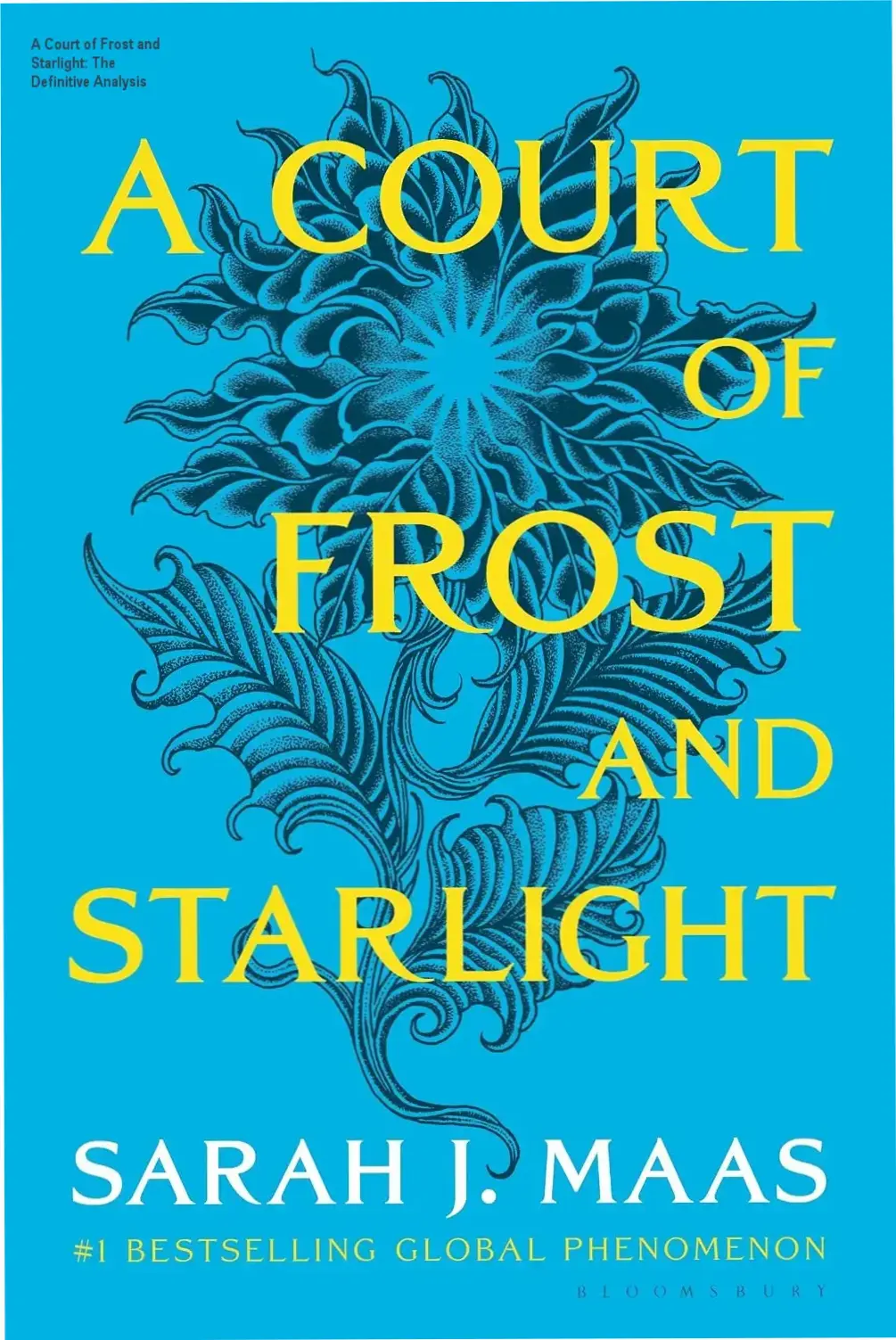
A Court of Frost and Starlight: The Definitive Analysis

Most readers approach a series sequel expecting an immediate escalation of stakes. They want the next war, the next betrayal, or a high-octane plot twist that flips the world upside down. But real recovery doesn’t work like that. Healing from massive trauma is slow, repetitive, and often frustratingly quiet.
This is the precise space where A Court of Frost and Starlight exists. It isn’t a traditional novel, but a bridge—a narrative exhale after the chaos of the previous books. For those wondering if this installment provides the closure or the action they crave, checking the current reader reception on Amazon reveals a polarizing divide between those who love the intimacy and those who hate the lack of plot.
Ready to dive into “A Court of Frost and Starlight”?
Explore available editions, check current live pricing, or download a free sample directly on Amazon.
Preview Free Sample & Check Price on Amazon
*You will be redirected to Amazon. As an Amazon Associate, we may earn from qualifying purchases.
The “Bridge Book” Dilemma: Expectation vs. Reality
Let’s be honest: this is not a novel. It is a novella. If you go into this expecting the epic scale of A Court of Wings and Ruin, you will likely be disappointed.
The primary conflict here isn’t an external enemy, but the internal wreckage left behind by war. Sarah J. Maas pivots from high fantasy warfare to a “slice-of-life” domesticity that feels jarring to some and comforting to others.
The plot is thin. We have the Winter Solstice, some political maneuvering, and a lot of conversations about feelings. For a segment of the fanbase, this is a slog. For others, it’s the only way to properly transition the characters into their new roles.
The reality is that this book serves as a connective tissue. It exists to set the stage for A Court of Silver Flames. Without it, the emotional shift in later books would feel unearned and abrupt.
| Feature | Standard ACOTAR Novel | Frost and Starlight |
|---|---|---|
| Primary Goal | World-altering conflict | Emotional recovery |
| Pacing | Fast / High Stakes | Slow / Atmospheric |
| Plot Density | Complex / Multi-layered | Linear / Episodic |
| Focus | External War | Internal Trauma (PTSD) |
The Weight of Aftermath: Exploring PTSD and Recovery
Where this book actually succeeds is in its depiction of the “after.” War doesn’t end when the treaty is signed; it ends when the survivors stop waking up screaming.
Feyre’s journey as High Lady is not about ruling with an iron fist, but about managing the collective grief of her court. The narrative focuses heavily on the invisible scars—the anxiety, the survivor’s guilt, and the struggle to find joy in a world that was almost destroyed.
The interaction between Feyre and Rhysand remains the emotional anchor. However, the focus shifts toward their supporting cast. We see the cracks in the armor of characters we previously thought were invincible.
“The war is over, but the battle to live with what happened is just beginning.”
This thematic shift is why the book has such a wide variance in ratings. Readers looking for “plot” see this as filler. Readers looking for “character study” see it as the most human part of the series.
Writing Style
Who Should Actually Read This?
This isn’t a standard novel. It is a bridge. If you are a completionist who needs every shred of character development and emotional closure after the war in A Court of Wings and Ruin, this is for you.
It appeals to the reader who enjoys “domestic” fantasy—the quiet moments, the rebuilding of cities, and the slow processing of trauma. It is essentially a long epilogue expanded into a book.
Who Should Skip It?
Avoid this book if:
- You are looking for a high-stakes plot, epic battles, or a new primary antagonist.
- You are reading the series for the first time and trying to “speed run” to the action.
- You get frustrated by narrative pacing that feels like a series of vignettes rather than a driving story.
The “Bridge” Trap: Value for Money
The most common purchasing mistake here is expecting a full-length novel. At 272 pages, it is a novella. Some readers feel cheated by the price-to-plot ratio, while others find the intimacy of the prose rewarding.
From an analytical standpoint, the value isn’t in the “what happens,” but in the “how they feel.” It sets the emotional stage for A Court of Silver Flames. Without it, the transition to the next book’s focus feels abrupt.
Editorial Verdict: Essential or Optional?
Strictly speaking? It is optional for the overarching plot, but essential for the emotional arc. It transforms the characters from wartime soldiers back into people.
It is a low-stress read that prioritizes atmosphere over adrenaline. If you love the characters more than the magic system, it’s a win. If you only care about the lore and the war, you can skim it.
To see if the pacing aligns with your preferences, you can check the latest reader reviews and pricing on Amazon.
Final Editorial Verdict
“A Court of Frost and Starlight” delivers on its core promise for its intended audience, offering compelling insights without fluff. As highlighted in our detailed edition breakdown, its practical depth and readability are its greatest strengths.
We also recommend checking the official Kindle sample and reader ratings before making your final purchase decision.
*You will be redirected to Amazon. As an Amazon Associate, we earn from qualifying purchases.

“Marketing de Conteúdo + Desenvolvimento Web = presença digital que gera valor.”