Caste by Isabel Wilkerson: The Definitive Impact Analysis

Most of us move through the world believing our social standing is a result of merit, luck, or perhaps a few systemic hurdles. We talk about race and class as the primary dividers of human experience, treating them as the definitive labels for who gets a seat at the table and who stays in the kitchen.
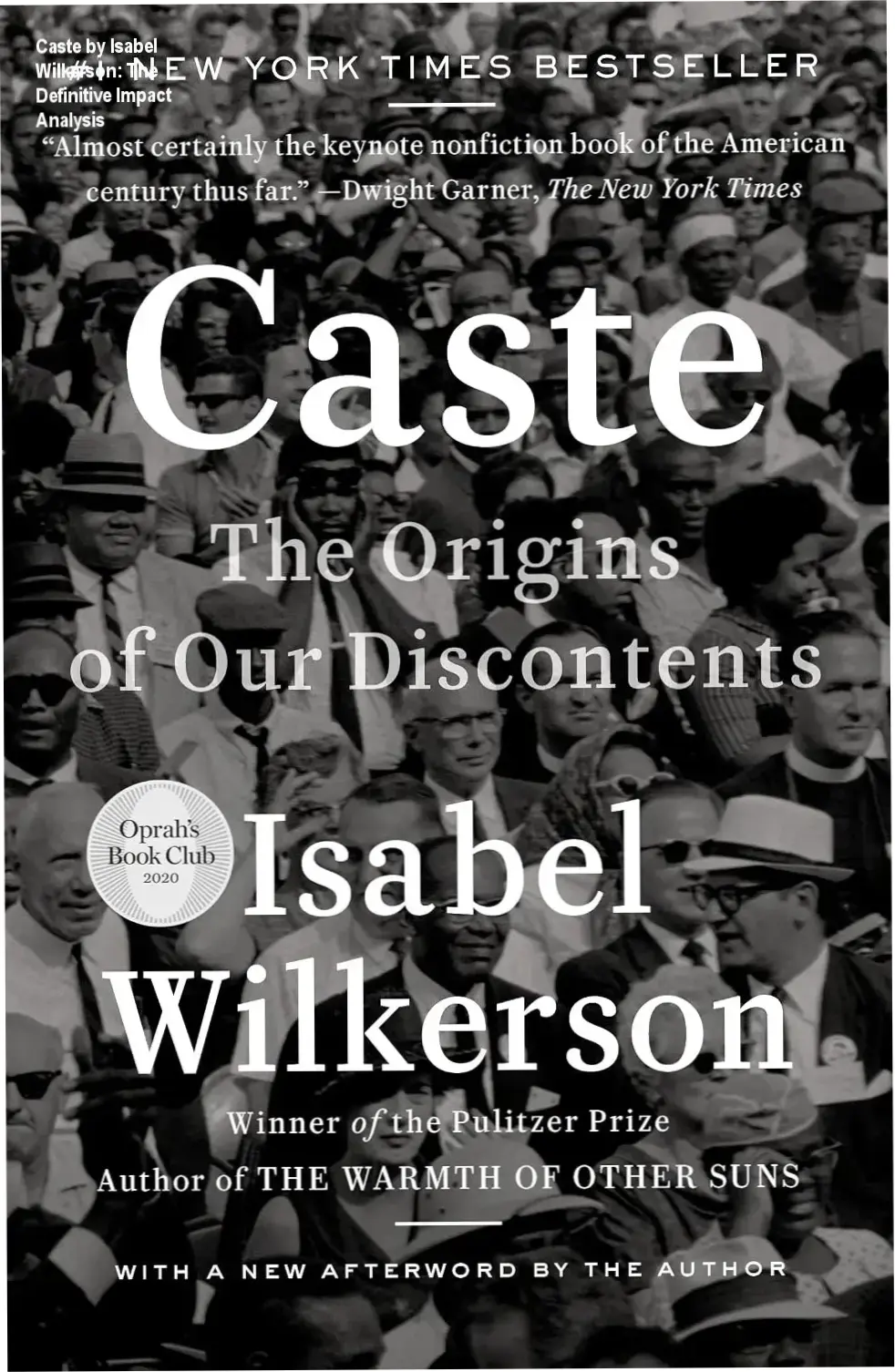
But there is a deeper, more invisible architecture at play. Isabel Wilkerson argues that we aren’t just dealing with prejudice, but with a rigid, unspoken hierarchy—a caste system. If you’ve ever felt an inexplicable tension in a room or a glass ceiling that refuses to crack, you might want to check the current reader reception of Caste to see if this framework resonates with your own experience.
Ready to dive into “Caste: The Origins of Our Discontents”?
Explore available editions, check current live pricing, or download a free sample directly on Amazon.
Preview Free Sample & Check Price on Amazon
*You will be redirected to Amazon. As an Amazon Associate, we may earn from qualifying purchases.
The Conceptual Pivot: Race vs. Caste
Wilkerson does something dangerous here: she tells us that “race” is the wrong word. To her, race is the skin-deep manifestation of a much deeper structural problem. She argues that race is the proxy, but caste is the engine.
This is a critical distinction. While racism is about individual or group hatred, caste is about power and placement. It is the “wordless usher” that assigns us our seats before the performance even begins.
By shifting the lens from race to caste, Wilkerson strips away the emotional defense mechanisms people use to ignore systemic inequality. It stops being about “bad people” and starts being about a “bad system.”
For the analytical reader, this is where the book provides its highest ROI. It provides a vocabulary to describe social friction that previously felt amorphous or purely emotional.
The Global Mirror: India, Germany, and America
The book’s most ambitious move is its comparative analysis. Wilkerson doesn’t just look at the US; she draws parallels between the American hierarchy, the Dalit system in India, and the racial laws of Nazi Germany.
At first glance, this feels like a stretch. Skeptics on Reddit and Goodreads often point out that the historical contexts of these three societies are vastly different.
However, Wilkerson isn’t arguing that these histories are identical. She is arguing that the mechanisms of control are the same. She identifies eight pillars of caste, including divine will, bloodlines, and stigma.
When you see these pillars applied across three different continents and eras, the pattern becomes undeniable. It reveals a human tendency to create hierarchies to protect power, regardless of the specific labels used.
| Caste Pillar | Function in Society | Real-World Effect |
|---|---|---|
| Divine Will | Justifies hierarchy as “natural” or “God-given” | Removes moral guilt from the oppressor |
| Bloodlines | Creates an “inherent” superiority based on birth | Who This Book Is For
Caste is not a casual read. It is a massive intellectual undertaking. This book is designed for the reader who is dissatisfied with superficial explanations of systemic inequality and wants a structural framework to understand why society remains divided. It is ideal for sociology enthusiasts, historians, and anyone who feels that the conversation around “race” in America is missing a deeper, more ancestral component. If you enjoy long-form narratives that blend personal memoir with global geopolitical analysis, this is your territory. Who Should Skip ItYou should probably skip this book if you are looking for a “quick-start guide” to social activism or a concise manual on current events. At over 600 pages, Wilkerson takes her time. If you prefer dense, academic textbooks devoid of storytelling, or conversely, if you cannot tolerate a slow-burn narrative that spends significant time on analogies (like the comparison to India and Nazi Germany), this may feel tedious. Value for Money: The Intellectual ROIFrom a value perspective, the “cost” here is more about time than money. You are paying for a Pulitzer Prize-winning level of research. The ROI comes from the shift in perspective—moving from a lens of race (which is fluid and biological) to caste (which is rigid and structural). Common purchasing missteps occur when buyers expect a political manifesto. This is an analytical study. The value lies in the “aha!” moments where Wilkerson connects the dots between disparate civilizations to show a universal pattern of human hierarchy. Editorial Verdict: Is It Worth the Commitment?Yes, but with caveats. The book is a masterclass in synthesis. It manages to make a complex sociological theory feel human by anchoring it in stories of individuals like Satchel Paige and Martin Luther King Jr. The primary limitation is the length. The author’s commitment to thoroughness sometimes borders on repetitive, but it ensures the argument is airtight. It is a foundational text for the 21st century that changes how you perceive the “assigned seats” in the theater of social life. To see how other readers have handled the book’s density or to find the best current pricing, you can check the verified user reviews and discounts on Amazon. Final Editorial Verdict“Caste: The Origins of Our Discontents” delivers on its core promise for its intended audience, offering compelling insights without fluff. As highlighted in our detailed edition breakdown, its practical depth and readability are its greatest strengths. We also recommend checking the official Kindle sample and reader ratings before making your final purchase decision. *You will be redirected to Amazon. As an Amazon Associate, we earn from qualifying purchases.  “Marketing de Conteúdo + Desenvolvimento Web = presença digital que gera valor.” |