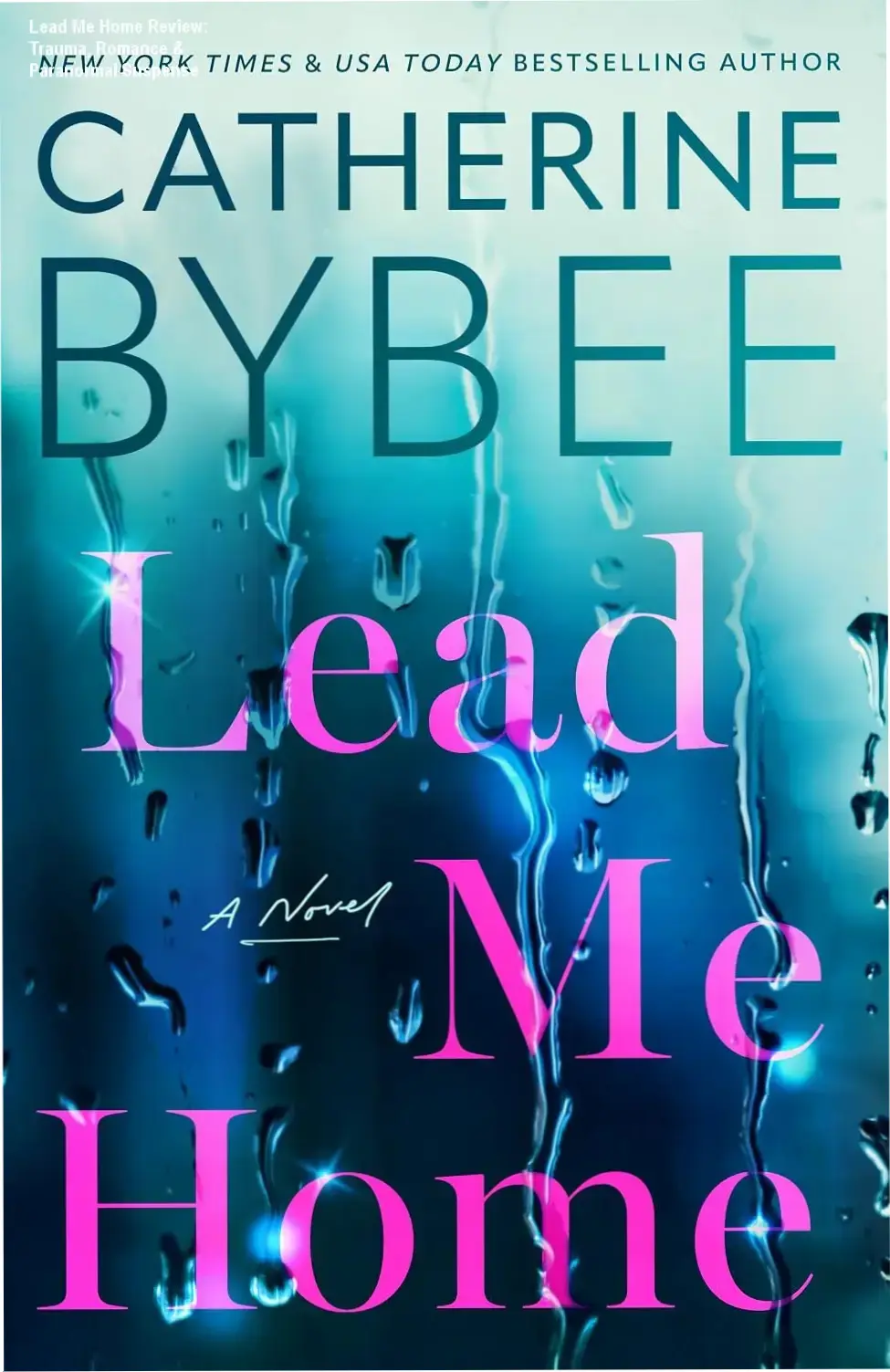
Lead Me Home Review: Trauma, Romance & Paranormal Suspense

Control is a comforting illusion, especially when you have spent a lifetime navigating chaos you didn’t create. For forensic accountants like Luna Canning, the protagonist of Catherine Bybee’s Lead Me Home, numbers offer a sanctuary where the columns always balance and the truth is immutable—unlike the messy, manipulative dynamics of a toxic family. This novel taps into a very specific, very modern anxiety: the terror of vulnerability after survival. It asks a difficult question: what happens when the defense mechanisms that kept you alive become the very walls trapping you? Bybee, a staple on the New York Times and USA Today bestseller lists, leans hard into the “Ghost Paranormal Romance” category here, currently sitting at #1 in that niche, but the spectral elements feel more like metaphors for generational trauma than cheap jump scares. If you are looking for a romance that respects the weight of its characters’ baggage before handing them a happy ending, you can check the current reader reception and sample chapters here.
The setup is classic Bybee: high competence meets high stakes. Luna isn’t waiting to be saved; she is auditing her own life. Enter Nate Warren, ex-FBI, current PI, and the exact kind of variable Luna’s spreadsheets cannot account for. The tension isn’t just “will they/won’t they”—it’s “can she survive letting him in?” The Victorian house on Queen Anne Hill acts as a third character, holding secrets that blur the line between haunting and memory. It is a smart, atmospheric entry point for a duology that promises to resolve more than just a romantic arc.
Ready to dive into “Lead Me Home: A Novel (Queen Anne Hill)”?
Explore available editions, check current live pricing, or download a free sample directly on Amazon.
Preview Free Sample & Check Price on Amazon
*You will be redirected to Amazon. As an Amazon Associate, we may earn from qualifying purchases.
Writing Style: Competence Porn Meets Emotional Forensics
Bybee writes with the precision of her protagonist. The prose is clean, uncluttered, and ruthlessly paced. There is zero fluff. Every scene advances the plot or peels back a layer of Luna’s armor. Readers on Goodreads frequently highlight the “competence porn” aspect—watching a hyper-capable woman navigate a crisis using skill rather than luck is a major draw. The dialogue cracksle with subtext. Nate doesn’t just flirt; he investigates. Luna doesn’t just deflect; she counters.
The “paranormal” label on Amazon is a marketing signal, not a genre constraint. The ghosts are atmospheric pressure, not poltergeists. They manifest as cold spots, moved objects, and a pervasive sense of being watched—perfect externalizations of Luna’s hypervigilance. This grounded approach satisfies romance readers allergic to high fantasy while scratching the gothic itch for the Queen Anne Hill setting. The 350-page length is the sweet spot: tight enough to binge in a weekend, dense enough to feel substantial.
Core Narrative Structure: The Audit of a Life
The narrative architecture mirrors a forensic audit. Act One establishes the baseline: Luna’s controlled existence. Act Two introduces the material misstatements—Nate, the stolen car, the mother. Act Three is the reconciliation. Bybee refuses the easy “love fixes trauma” trope. The romance runs parallel to the thriller plot, not on top of it. The mother’s arrival isn’t a coincidence; it’s a catalyst forcing the climax.
Verified Amazon reviewers often note the “slow burn” label is slightly misleading. The chemistry is instant, the emotional availability is the slow burn. This distinction matters. The intimate scenes are explicit but earned, serving as vulnerability milestones rather than filler. The mystery of the car theft and the mother’s “dangerous man” provides enough external momentum to keep non-romance readers engaged. It’s a hybrid that works because neither genre half-asses the other.
Character Dynamics: Walls, Windows, and Warrants
Luna Canning is a masterclass in writing a “difficult” heroine who remains sympathetic. She is prickly, controlling, and emotionally stingy. She has reasons. Bybee shows the receipts: the mother’s narcissism, the father’s absence, the financial ruin. You understand the spreadsheet mentality. Nate Warren is the perfect foil. He is patient without being a doormat. He has his own FBI baggage—cases gone cold, lines crossed. He recognizes Luna’s tactics because he used them himself.
The mother, Eleanor, is a villain written with terrifying realism. She isn’t cartoonish; she is insidious. She weaponizes guilt, rewrites history, and shows up with a predator in tow. The “dangerous man” subplot elevates the stakes from domestic drama to genuine thriller territory. Readers on Reddit’s r/RomanceBooks have compared the mother-daughter dynamic to The Glass Castle levels of toxicity, praising Bybee for not softening the edges for a neat reconciliation. Some readers wanted more groveling from the mother; Bybee correctly denies them that satisfaction.