We all cling to the illusion that our routines protect us. The morning coffee, the specific route to work, the rhythmic pace of a daily jog—these habits create a psychological buffer against the chaos of the world. We mistake predictability for safety.
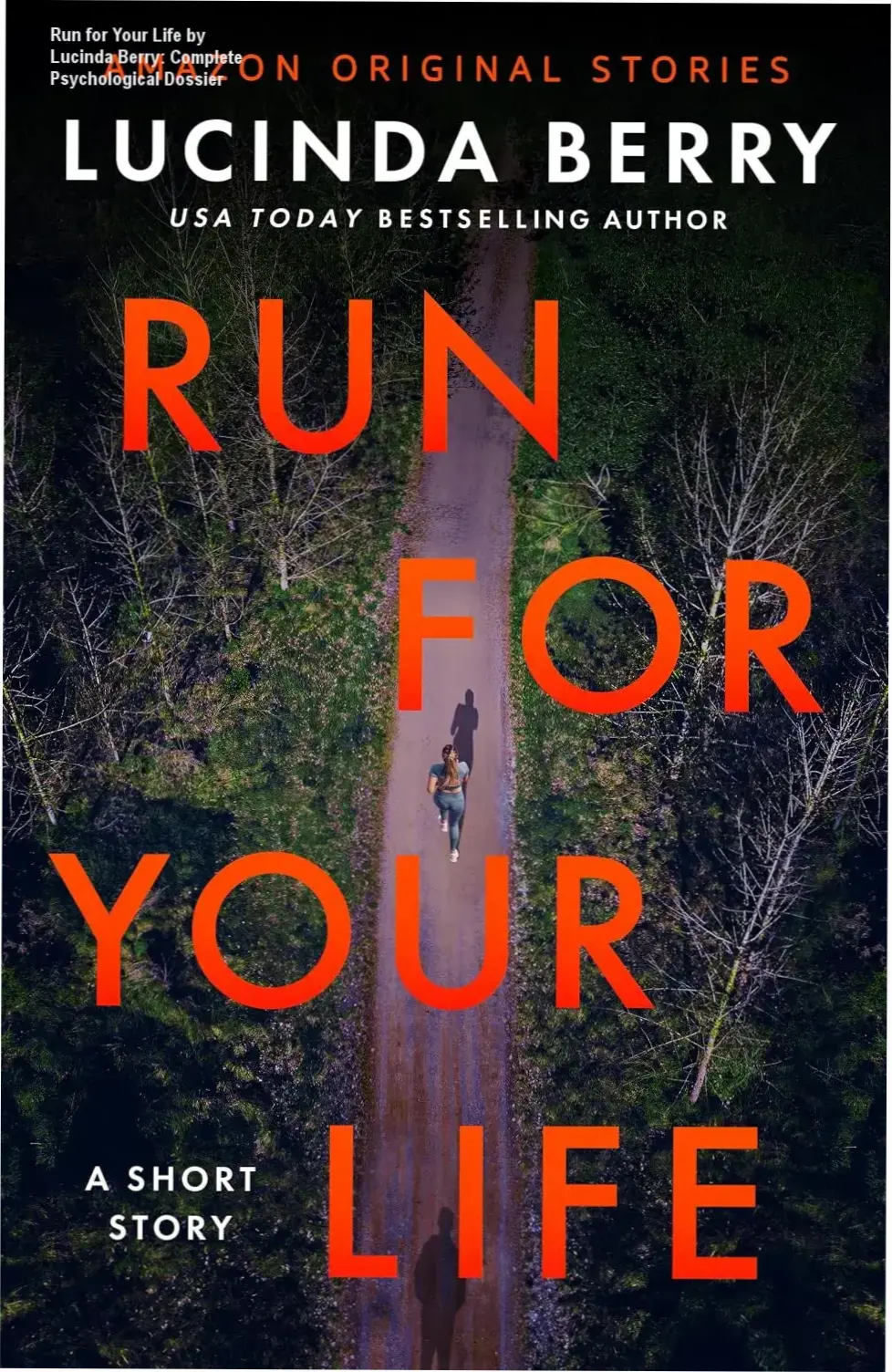
Lucinda Berry’s “Run for Your Life” dismantles this comfort in under 80 pages. It explores the terrifying moment when the “safe” muscle memory of a morning run leads directly into a predator’s trap. You can check the current reader reception and pricing on Amazon to see how this psychological sprint is landing with the thriller community.
Ready to dive into “Run for Your Life”?
Explore available editions, check current live pricing, or download a free sample directly on Amazon.
*You will be redirected to Amazon. As an Amazon Associate, we may earn from qualifying purchases.
The “Sprinting” Narrative: Pacing and Structure
At 72 pages, this isn’t a novel; it’s a psychological ambush. Lucinda Berry utilizes the Amazon Original Stories format to strip away the fluff. There is no slow burn here. The story starts with the aftermath of the abduction, immediately plunging the reader into the claustrophobia of a lakeside cabin.
The pacing mimics the title. It’s fast, breathless, and intentionally stressful. Berry doesn’t spend time on exhaustive world-building because the setting is designed to be a cage. The limitation of the page count forces a level of narrative efficiency that often benefits the thriller genre.
However, this brevity is a double-edged sword. Some readers on Goodreads argue that the transition from terror to resolution happens too quickly. When you’re dealing with high-stakes kidnapping, a “short story” length can sometimes make the climax feel rushed rather than inevitable.
The Psychology of Forced Dependence
The most disturbing element of “Run for Your Life” isn’t the kidnapping itself, but the twisted caretaking. Riley is injured. She is bleeding. She is physically incapable of a simple escape.
This creates a perverse power dynamic. Dawson Miller, the captor, doesn’t just hold her captive; he becomes her sole provider of medical care. This is where Berry excels—exploring the psychological horror of having to trust the person who destroyed your life just to survive the next hour.
It taps into a primal fear: the loss of autonomy. The “unsettling care” Dawson provides is more menacing than overt violence because it suggests a calculated, long-term plan. He isn’t acting on impulse; he is executing a script.
Metric
Analysis
Verdict
Tension Level
High from page one; constant threat.
Excellent
Character Depth
Functional, but limited by length.
Average
Plot Twists
Methodical buildup to a specific goal.
Good
Who This Is Actually For
Run for Your Life isn’t for the reader seeking a sprawling epic or a slow-burn mystery. It is a surgical strike of a story.
The ideal reader is someone who enjoys “contained” thrillers—where the tension comes from limited space and an escalating power imbalance. If you appreciate the claustrophobia of a psychological game and have exactly two hours to kill, this fits your profile.
Who Should Skip This Book
You should probably pass on this if:
You crave complex world-building: At 72 pages, there is no room for fluff or extensive lore.
You dislike “captive” tropes: The plot relies heavily on the vulnerability of the protagonist.
You expect a full-length novel: This is an Amazon Original Short Story. If you’re looking for a 300-page character study, you will feel underwhelmed.
Value for Money: The “Short Story” Gamble
Evaluating a short story on a “per page” basis is a mistake. The value here isn’t in the quantity of words, but in the density of the tension.
Lucinda Berry strips away the filler. You get a high-impact narrative that delivers a complete emotional arc without the mid-book slump common in psychological thrillers. It is a low-cost, low-time-investment entry point into her writing style.
Common Purchasing Missteps
The biggest error readers make is treating this as a standalone novel. It is a “sprint.” Expecting a detailed exploration of the antagonist’s entire life history is unrealistic given the format. It is designed to be consumed in one sitting, leaving you breathless rather than fully satiated.
Editorial Verdict
It is a lean, mean psychological exercise. While some may find the resolution too abrupt due to the length, the pacing is relentless. It succeeds because it doesn’t try to be more than it is: a gripping, terrifying glimpse into a routine gone wrong.
“Run for Your Life” delivers on its core promise for its intended audience, offering compelling insights without fluff. As highlighted in our detailed edition breakdown, its practical depth and readability are its greatest strengths.
Most of us spend our adult lives wondering if a single different choice made decades ago would have rewritten our entire current reality. We treat memory like a curated gallery, carefully selecting the highlights while ignoring the dusty corners where the most pivotal, painful connections reside. It is a common human fallacy to believe we…
We are conditioned to view loss as a void—a subtraction of something essential that leaves us permanently diminished. Most self-help guides try to “fix” this grief with clinical steps or forced positivity, which often feels dismissive of the actual human experience of heartache. The real struggle isn’t just getting over the pain, but finding a…
Annabel Monaghan has quietly mastered a specific kind of literary alchemy: she takes the glossy, high-stakes scaffolding of a classic rom-com trope and fills it with the gritty, unglamorous texture of actual adult life. Dolly All the Time lands as a GMA Book Club pick and instant New York Times bestseller precisely because it refuses…
Most of us have a secret obsession with “cold cases.” There is something inherently magnetic about a mystery that has remained unsolved for decades, especially when it involves a glamorous icon from a bygone era. The problem is that most modern thrillers are either too violent or too fast-paced to feel authentic. Readers are increasingly…
The dark fantasy genre often suffers from a common misconception: that “romance” must imply a safe, predictable, and morally upright hero. Readers frequently enter these stories expecting a traditional redemption arc, only to find themselves lost in a labyrinth of moral ambiguity and visceral intensity. The psychological challenge isn’t just about following a plot, but…
In the modern literary landscape, readers often find themselves caught between two extremes: escapist那個 fantasy that feels too safe, or gritty realism that lacks emotional resonance. We crave stories that mirror the complexity of human survival—the impossible choices we make when morality becomes a luxury we can no longer afford. Many readers enter the “Darkentarromantasy”…
Utilizamos cookies para garantir que lhe proporcionamos a melhor experiência no nosso site. Se você continuar a usar este site, assumiremos que você está satisfeito com ele.