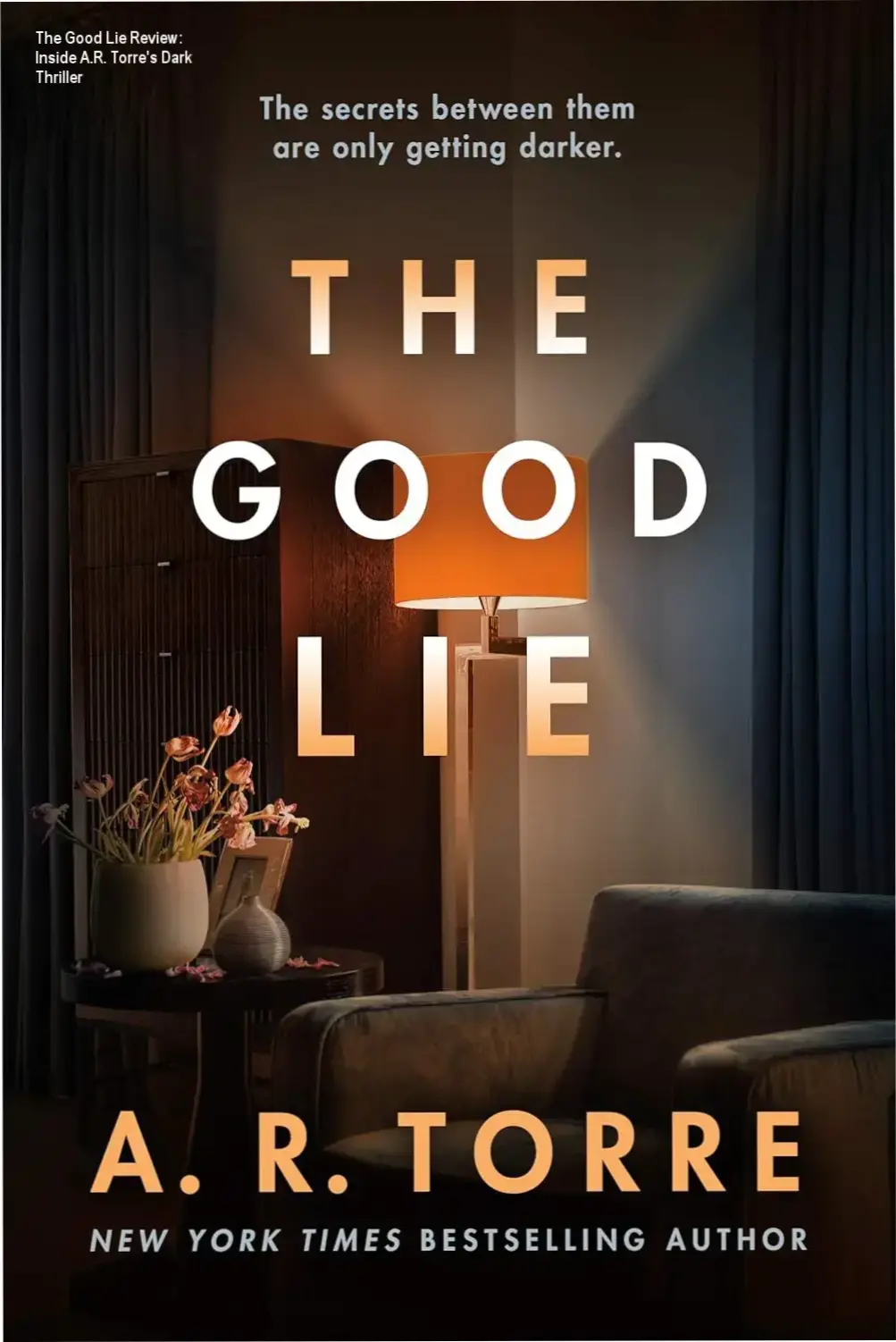
The Good Lie Review: Inside A.R. Torre’s Dark Thriller

The psychological thriller market is saturated with “unreliable narrator” tropes, but few novels weaponize the reader’s trust in professional authority quite like this one. We instinctively trust the psychiatrist sitting across from the killer; The Good Lie asks what happens when that psychiatrist is the one being profiled. It taps into a primal anxiety: the terrifying gap between clinical detachment and personal trauma. A.R. Torre constructs a narrative where the expert witness becomes the blind spot, forcing the reader to question every diagnosis rendered in the first half. If you enjoy thrillers that prioritize psychological architecture over cheap jump scares, you can check the current reader reception and edition options here.
The novel arrived during a peak #BookTok cycle, riding a wave of “twist you didn’t see coming” recommendations. That viral momentum often signals style over substance, yet the 76,000+ Amazon ratings averaging 4.3 stars suggest a stickiness that algorithms alone cannot manufacture. Readers aren’t just finishing it; they are arguing about the ending in comment sections. That friction—between the clinical procedural setup and the messy, emotional payoff—is exactly where this book lives. It doesn’t just want to surprise you; it wants to make you complicit in the misdirection.
Ready to dive into “The Good Lie”?
Explore available editions, check current live pricing, or download a free sample directly on Amazon.
Preview Free Sample & Check Price on Amazon
*You will be redirected to Amazon. As an Amazon Associate, we may earn from qualifying purchases.
Writing Style: Clinical Precision Meets Visceral Pace
Torre writes with a distinct lack of fluff. The prose mirrors Gwen Moore’s profession: sterile, observant, and ruthlessly efficient. There are no purple passages describing the California light; there are only the details that matter to a threat assessment. This creates a deceptive reading speed. You fly through 257 pages because the sentences are engineered for momentum, not beauty.
Dialogue carries the heavy lifting. The therapy sessions between Gwen and Randall Thompson are masterclasses in subtext. Every “I see” or “Tell me more” feels like a chess move. Goodreads reviewers frequently highlight these scenes as the “gold standard” for thriller dialogue—realistic enough to bore a layperson, terrifying to anyone spotting the manipulation. One top Amazon reviewer noted: “It reads like a case file you aren’t cleared to read.” That authenticity is the hook. It grounds the wilder third-act swings in a reality the text earns early.
Pacing follows a strict three-act structure disguised as a character study. Act one is the file review. Act two is the interview room. Act three is the free fall. The transition points are sharp. There is no saggy middle because the investigation *is* the relationship building. The “slow burn” label some reviewers apply is a misread; it’s a fuse burning underwater. You don’t see the smoke until the explosion.
Narrative Architecture: The Dual POV Trap
The alternating perspectives—Gwen’s clinical third-person close and Robert Kavin’s grief-stricken first-person—function as a structural lie. Gwen’s sections feel objective. Robert’s feel raw. The reader instinctively anchors to Gwen as the “truth teller” and Robert as the “emotional variable.” Torre exploits this bias mercilessly.
Reddit threads in r/thrillerbooks and r/books are littered with readers admitting they ignored red flags in Robert’s narration because Gwen’s sections felt like “facts.” This is the book’s greatest magic trick. It uses the reader’s genre literacy against them. We know the “grieving father” archetype. We expect him to be the hero or the red herring. We rarely expect him to be the architect.
The timeline manipulation is subtle. Key scenes are revisited from the second POV with critical context added—or subtracted. It never feels like a cheat (the “I didn’t think about the murder while narrating my day” problem). Instead, it feels like a re-contextualization of evidence. The “Bloody Heart” mythology serves as a MacGuffin that slowly reveals itself as a mirror for the protagonists’ damage. The killer isn’t the point; the hunters are.
| Element | Execution | Verdict |
|---|---|---|
| Prose Style | Sparse, clinical, dialogue-heavy | High efficiency |
| POV Strategy |
Ideal Reader ProfileThis novel lands squarely in the sweet spot for readers who prefer psychological tension over graphic violence. If you enjoy unreliable narrators, therapy-session dynamics, and legal maneuvering that feels grounded rather than theatrical, this is a strong pick. Fans of Karin Slaughter or early Jonathan Kellerman will appreciate the clinical detachment Gwen brings to the chaos. It works best for readers who like their twists earned through character psychology rather than cheap misdirection. Who Should Skip It
Value for Money & Format ConsiderationsAt 257 pages, the Kindle edition moves at a brisk pace — no filler, no sagging middle. The prose is clean, dialogue-heavy, and optimized for single-sitting consumption. Print length suggests a tight edit, which is rare in modern thrillers that often bloat past 400 pages. If you subscribe to Kindle Unlimited, check enrollment status before buying; otherwise, the digital price point sits fairly for a traditionally published title with this level of craft. Audiobook narration adds texture to Gwen’s internal monologue, but the print version handles the pacing shifts better during the courtroom sequences. Common Purchasing MisstepsDon’t expect a traditional “whodunit” structure where clues are laid out for the reader to solve. The mystery here is why, not who — and the answer lives in the gray zones of memory and manipulation. Some readers mistake the slow-burn first act for lack of stakes; it’s actually building the psychological architecture required for the final act to land. Also, avoid reading synopses that spoil the central relationship dynamic — the Gwen/Robert tension drives the entire narrative engine. Contextual FAQIs this a standalone or series? Standalone. No prior knowledge required, no cliffhanger. How graphic is the violence? Restrained. Violence happens off-page or in clinical retrospect. The horror is psychological, not visceral. Does the romance overshadow the thriller? No. The relationship serves the plot twists, not the other way around. It remains professional-adjacent until the final chapters. Is the ending satisfying? Divisive by design. It prioritizes thematic resonance over neat closure. Readers needing every thread tied will feel shortchanged; those accepting ambiguity will find it haunting. For a thriller that respects your intelligence and rewards re-reading, The Good Lie delivers a compact, high-trust reading experience. Final Editorial Verdict“The Good Lie” delivers on its core promise for its intended audience, offering compelling insights without fluff. As highlighted in our detailed edition breakdown, its practical depth and readability are its greatest strengths. We also recommend checking the official Kindle sample and reader ratings before making your final purchase decision. *You will be redirected to Amazon. As an Amazon Associate, we earn from qualifying purchases.  “Marketing de Conteúdo + Desenvolvimento Web = presença digital que gera valor.” |