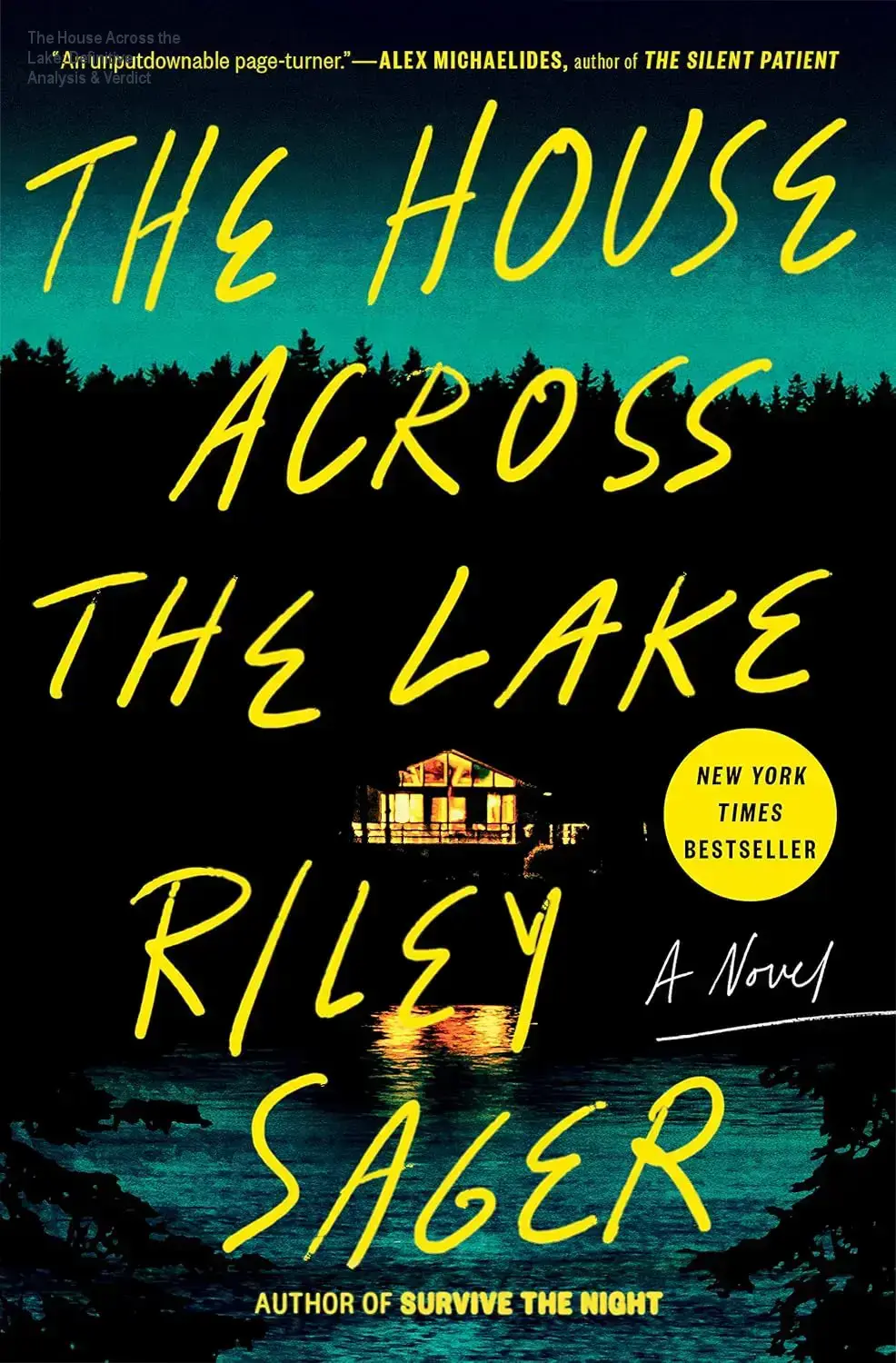
The House Across the Lake: Definitive Analysis & Verdict

We have an innate, almost primal obsession with the curated lives of others. In an era of Instagram filters and LinkedIn highlights, we are all voyeurs, constantly trying to bridge the gap between a neighbor’s polished exterior and the messy reality hidden behind closed doors.
This psychological itch is exactly what Riley Sager exploits in his latest thriller. For those seeking a high-tension escape that challenges the reliability of the narrator, you can check the current reader reception and availability of this bestseller to see if it fits your mood.
The expectation for a Sager novel is simple: a fast pace, a claustrophobic setting, and a plot twist that attempts to flip the entire narrative on its head. However, the real challenge for the reader isn’t just solving the mystery, but deciding if the “shocks” are earned or merely theatrical.
Ready to dive into “The House Across the Lake”?
Explore available editions, check current live pricing, or download a free sample directly on Amazon.
Preview Free Sample & Check Price on Amazon
*You will be redirected to Amazon. As an Amazon Associate, we may earn from qualifying purchases.
The Hook: Voyeurism as a Narrative Engine
The story follows Casey Fletcher, a widowed actress whose career is in a tailspin. She retreats to a Vermont lake house, armed with binoculars and bourbon. Her pastime? Watching the “perfect” couple across the water.
This setup is a classic trope, reminiscent of Rear Window. Sager uses the binoculars not just as a prop, but as a lens to distort the truth. The pacing is aggressive from the start, pulling the reader into a cycle of observation and suspicion.
The narrative structure relies heavily on the “unreliable observer” dynamic. We see what Casey sees, but we are forced to remember that Casey is an actress—someone professionally trained to perform and deceive.
Technical Breakdown: Pacing vs. Depth
Sager writes for the “binge-reader.” The chapters are short, the cliffhangers are frequent, and the prose is stripped of unnecessary flourish. It is designed for maximum velocity.
However, this speed comes at a cost. Some readers on Goodreads have noted that the characters can feel like archetypes rather than people. The “glamorous tech mogul” and the “troubled actress” are roles we’ve seen many times before.
That said, the atmospheric tension is palpable. Sager excels at making a serene lake setting feel oppressive. The isolation of Vermont becomes a character in itself, amplifying the paranoia.
| Technical Metric | Evaluation | Verdict |
|---|---|---|
| Pacing | Rapid-fire / High velocity | Excellent for escapism |
| Character Depth | Archetypal / Plot-driven | Average |
| Atmosphere | Claustrophobic / Moody | Strong |
| Twist Execution | Polarizing / Bold | Subjective |
The “Sager Twist”: Expectation vs. Reality
In the thriller community, a “Riley Sager twist” is a known entity. He doesn’t just nudge the plot; he usually tries to demolish the foundation of everything you’ve read for the first 200 pages.
In The House Across the Lake, the twist is a gamble. For some, it’s a brilliant subversion of the genre. For
Who Should Actually Read This?
This isn’t a book for the literary purist or someone seeking a slow-burn character study. Riley Sager writes “popcorn thrillers”—designed for speed, shock, and high escapism.
The ideal reader profile:
- Fans of the “voyeur” trope (think Rear Window but with modern anxiety).
- Readers who prioritize a “gasp-worthy” plot twist over deep emotional resonance.
- Binge-readers looking for a fast-paced weekend read that doesn’t require heavy mental lifting.
Who should skip this book:
If you are fatigued by the “unreliable narrator” cliché or find “shock for the sake of shock” endings frustrating, this will likely irritate you. If you prefer grounded, realistic police procedurals, Sager’s penchant for the dramatic might feel too “Hollywood.”
Value for Money & Realistic Expectations
At roughly 363 pages, the value here lies in the pacing. You aren’t paying for prose that changes your life; you’re paying for a narrative engine that refuses to stop.
A common purchasing mistake is expecting a complex psychological manual on grief or marriage. While Casey is a widow and the Royces have a fractured union, these elements are mostly atmospheric scaffolding for the mystery. It is a narrative puzzle, not a psychological dissertation.
Quick Verdict FAQ
Is it a slow burn? No. It hits the ground running and maintains a high velocity until the climax.
Is the twist predictable? For seasoned thriller veterans, some breadcrumbs are visible. For the average reader, it usually lands with the intended impact.
Does it live up to the hype? As an escapist piece of entertainment, yes. As a piece of high-art suspense, it’s mid-tier.
Ultimately, The House Across the Lake is a highly efficient piece of commercial fiction. It delivers exactly what it promises on the cover: suspense, secrets, and a fast exit from reality. To see if the current pricing matches the value for your reading habits, you can check the latest user reviews and discounts on Amazon.
Final Editorial Verdict
“The House Across the Lake” delivers on its core promise for its intended audience, offering compelling insights without fluff. As highlighted in our detailed edition breakdown, its practical depth and readability are its greatest strengths.
We also recommend checking the official Kindle sample and reader ratings before making your final purchase decision.
*You will be redirected to Amazon. As an Amazon Associate, we earn from qualifying purchases.

“Marketing de Conteúdo + Desenvolvimento Web = presença digital que gera valor.”