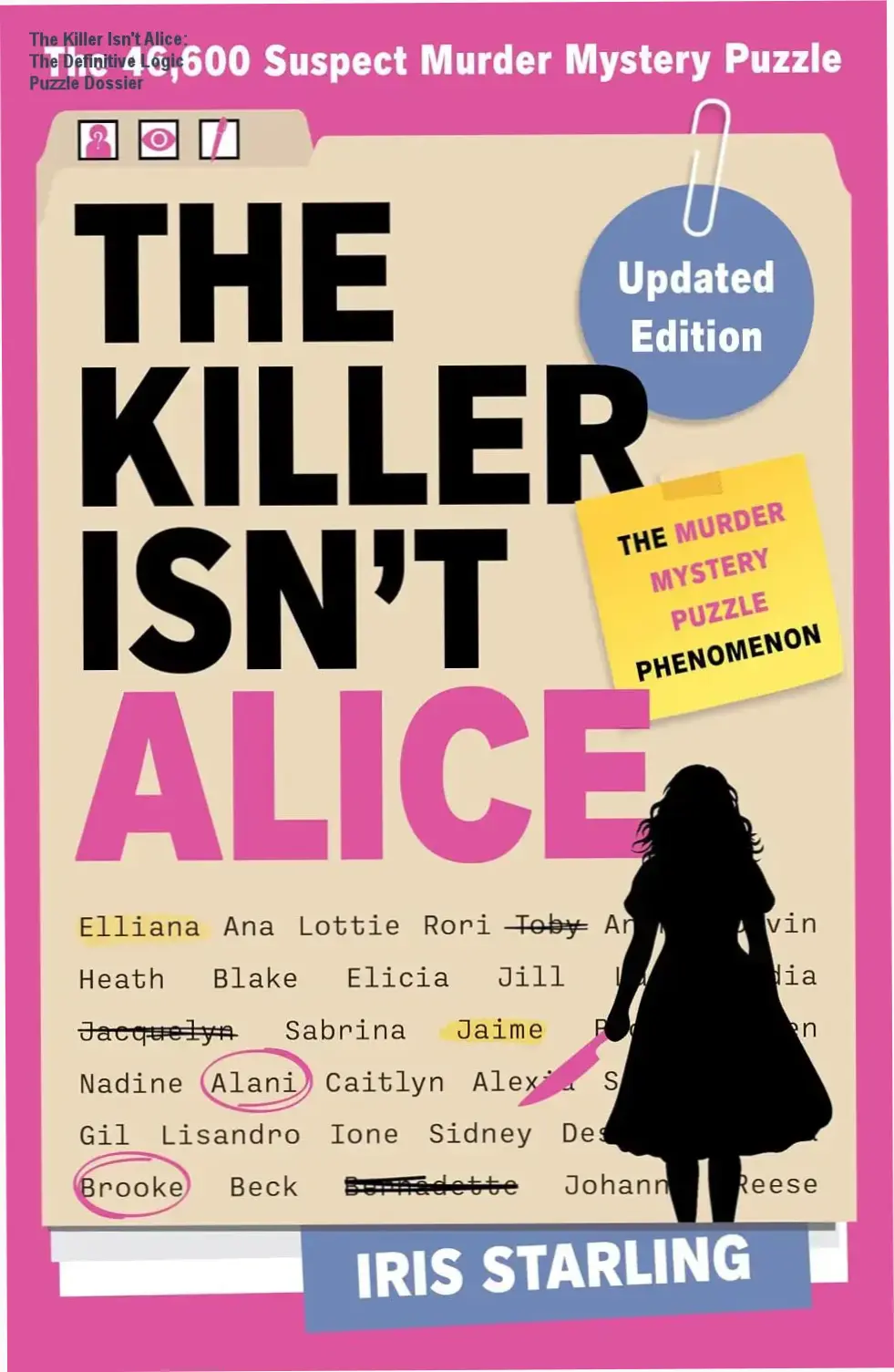
The Killer Isn’t Alice: The Definitive Logic Puzzle Dossier

Most mystery novels treat the reader like a passenger. You follow the detective’s lead, soak in the atmosphere, and hope the final twist doesn’t feel like a cheat. It is a passive experience, a curated journey where the “puzzle” is often just a series of breadcrumbs leading to a predetermined conclusion.
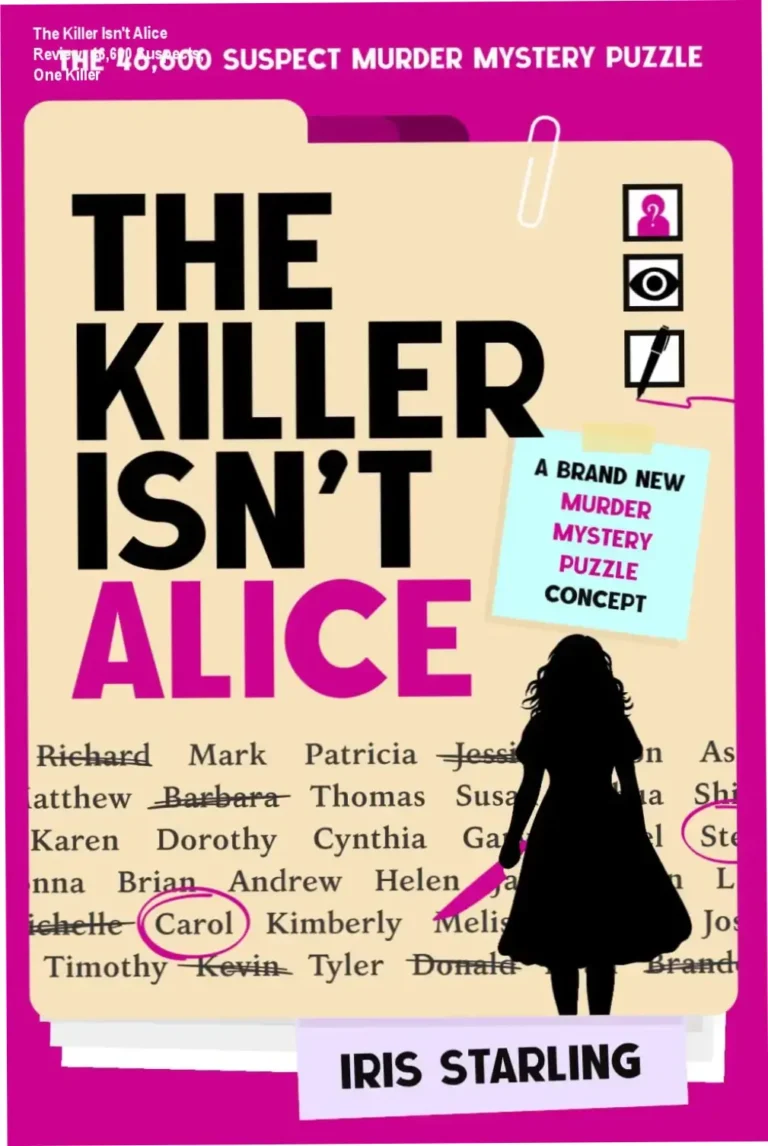
But there is a growing frustration with this passivity. Modern readers, conditioned by escape rooms and complex gaming logic, want to actually do the work. They don’t want to be told who the killer is; they want to prove it. This is where The Killer Isn’t Alice shifts the paradigm from a narrative to a mechanical challenge, turning the act of reading into a high-stakes data filtration process.
Ready to dive into “The Killer Isn’t Alice”?
Explore available editions, check current live pricing, or download a free sample directly on Amazon.
Preview Free Sample & Check Price on Amazon
*You will be redirected to Amazon. As an Amazon Associate, we may earn from qualifying purchases.
The Logic Engine: Data Filtration vs. Narrative
Let’s be clear: this is not a novel. If you are looking for character arcs, poignant dialogue, or atmospheric descriptions of a rainy London street, you are in the wrong place.
Iris Starling has essentially created a physical database. You are given 46,600 suspects and 18 clues. Your job is not to “guess” based on a hunch, but to methodically eliminate names until only one remains.
It is a brutal exercise in deductive reasoning. The beauty—and the terror—of this structure is its objectivity. There is no room for interpretation. A suspect either fits the criteria of the clue or they don’t.
This transforms the reading experience into a game of attrition. You aren’t reading for plot; you are reading for parameters. It’s a refreshing, if exhausting, departure from the standard whodunnit.
The Psychology of the “Grind”
There is a specific kind of mental friction that occurs when you face a list of 46,600 names. For some, this is a nightmare of tediousness. For others, it is an addictive flow state.
The “grind” is where the book wins or loses its audience. The satisfaction doesn’t come from the story, but from the act of crossing out a thousand names in one go.
It mimics the feeling of a complex spreadsheet project, but with the dopamine hit of a crime solver. You feel the “search area” shrinking, and that momentum is what keeps you flipping pages.
Skeptics might call it a glorified elimination game. They aren’t wrong. But in a market saturated with predictable plots, the honesty of this mechanical challenge is its strongest selling point.
| Feature | Traditional Mystery | The Killer Isn’t Alice |
|---|---|---|
| Primary Goal | Emotional Engagement | Logical Elimination |
| Role of Reader | Observer | Lead Investigator |
| Resolution | Author’s Reveal | User’s Deduction |
| Pacing | Narrative Arc | Iterative Filtering |
Expectation vs. Reality: The “Book” Misconception
A common point of contention in reader forums and Amazon reviews is the format. Some buyers expect a mystery novel with a puzzle at the end.
Who Is This Actually For?
Let’s be clear: this is not a “beach read” or a traditional whodunnit. If you are looking for character arcs, atmospheric prose, or a plot that unfolds through dialogue, you are in the wrong place.
The ideal reader is someone who finds genuine pleasure in the “grind” of deduction. It’s for the Sudoku addicts, the logic grid enthusiasts, and people who actually enjoy the process of crossing names off a list. It appeals to the “completionist” mindset—the drive to strip away 46,599 wrong answers to find the one truth.
Who Should Skip This Book
You should probably pass on this if:
- You want a narrative: The “story” is merely a wrapper for a massive logic puzzle.
- You hate repetitive tasks: Methodically filtering thousands of names can feel like data entry for some.
- You prefer passive entertainment: This requires active, focused mental labor.
Value for Money: Analysis
From a purely technical standpoint, you aren’t paying for “literature”; you’re paying for a gamified experience. The value lies in the hours of engagement. Unlike a standard novel that you finish in a weekend, this is a project.
The common purchasing mistake here is expecting a fast-paced thriller. If you treat it as a book, you’ll be disappointed. If you treat it as a board game in book form, the price-to-entertainment ratio is high.
Quick Verdict: Is It Worth the Effort?
If you have a competitive streak and a penchant for organization, yes. It transforms the act of reading into a forensic investigation. However, be prepared for the mental fatigue that comes with analyzing 18 different clues against a sea of suspects.
For those ready to test their deductive limits, it’s a refreshing break from digital screens. You can check the current user ratings and see if the difficulty level matches your skill set via the official Amazon page.
Final Editorial Verdict
“The Killer Isn’t Alice” delivers on its core promise for its intended audience, offering compelling insights without fluff. As highlighted in our detailed edition breakdown, its practical depth and readability are its greatest strengths.
We also recommend checking the official Kindle sample and reader ratings before making your final purchase decision.
*You will be redirected to Amazon. As an Amazon Associate, we earn from qualifying purchases.

“Marketing de Conteúdo + Desenvolvimento Web = presença digital que gera valor.”