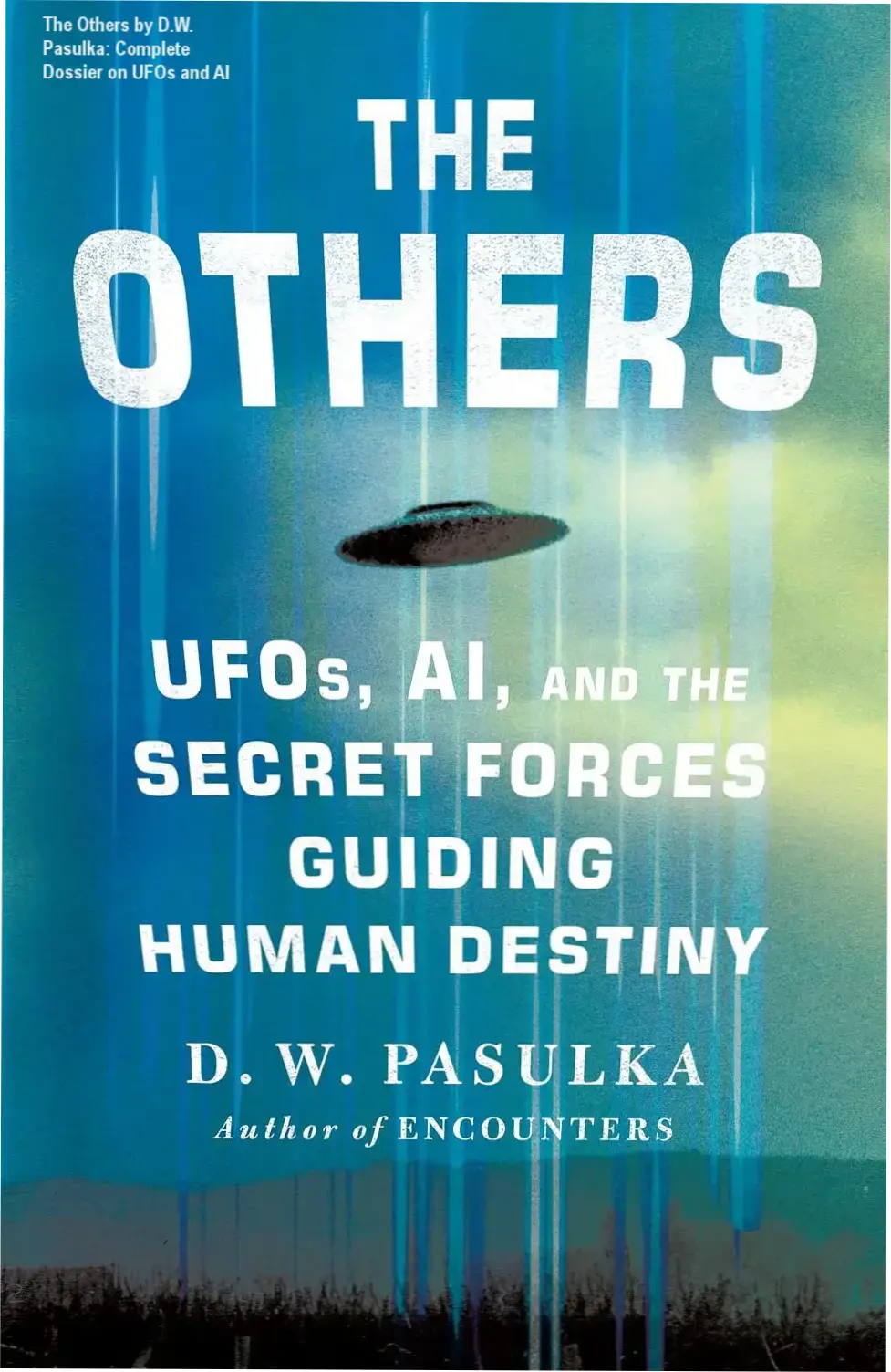
The Others by D.W. Pasulka: Complete Dossier on UFOs and AI

We have reached a strange tipping point in human history. For decades, the conversation around UFOs was relegated to late-night radio shows and tin-foil hat forums. Now, the discourse has shifted into the halls of Congress and the boardrooms of Silicon Valley, blending the paranormal with the cutting edge of artificial intelligence.
The real challenge for the modern reader isn’t finding information—it’s filtering the noise. We are caught between a desperate desire for transcendence and a growing fear that our creations, specifically AI, might become the “non-human intelligence” we’ve spent centuries searching for in the stars. You can check the current reception of The Others on Amazon to see how this synthesis is landing with a skeptical public.
D. W. Pasulka doesn’t approach this as a conspiracy theorist, but as a scholar of religious studies. She asks a pivotal question: what if the “aliens” we see today are simply the modern iteration of the angels and demons of the past? This isn’t just a book about flying saucers; it’s an autopsy of human belief and our obsession with immortality.
Ready to dive into “The Others: UFOs, AI, and the Secret Forces Guiding Human Destiny”?
Explore available editions, check current live pricing, or download a free sample directly on Amazon.
Preview Free Sample & Check Price on Amazon
*You will be redirected to Amazon. As an Amazon Associate, we may earn from qualifying purchases.
The Synthesis of Sacred and Synthetic
Pasulka’s core argument is a bold one: the line between theology and technology is blurring. She posits that our historical encounters with “the divine” or “the demonic” were perhaps early interpretations of non-human intelligences (NHI).
The narrative doesn’t stop at ancient history. It pivots sharply toward the present, linking these “visitors” to the rise of Artificial Intelligence. The suggestion is that we are no longer just waiting for a signal from space; we are building the intelligence that will redefine our species.
For the skeptical reader, this is where the book becomes a tightrope walk. Pasulka avoids the “I believe” trap by focusing on the architecture of belief. She isn’t necessarily proving aliens exist; she is proving that the powerful people shaping our future believe they do.
This distinction is crucial. The book transforms from a UFO chronicle into a study of power, influence, and the psychological drive for life extension. It’s less about “little green men” and more about the ego of the techno-elite.
Writing Style: Academic Rigor vs. Narrative Pace
Reading Pasulka is like attending a high-level university seminar that occasionally veers into a sci-fi novel. Her background as a scholar is evident in the structure. She uses first-person interviews and suppressed histories to build her case.
The pacing is deliberate. It doesn’t rush to a conclusion. Instead, it layers evidence. She starts with 20th-century Catholic visionaries and moves toward modern tech insiders. This creates a sense of inevitable progression.
However, some readers on Goodreads have noted that the academic tone can occasionally feel dense. If you are looking for a fast-paced “X-Files” style thriller, this isn’t it. It’s a slow burn that requires active intellectual engagement.
The strength lies in her ability to connect disparate dots. Linking Arthur C. Clarke’s prophecies to modern AI development is a masterstroke of synthesis that keeps the reader questioning their own assumptions about linear time and progress.
The “Immortality” Complex and Silicon Valley
One of the most provocative sections of the book deals with the quest for immortality. Pasulka examines the intersection of life extension science and the belief in non-human guidance.
There is a recurring theme of “upgrading” human consciousness. The book suggests that the dream of living forever isn’t just a medical goal, but a spiritual one—influenced by a perceived “blueprint” provided by these Other intelligences.
This is where the book hits its stride in terms of real-world value. It forces the reader to look at the current AI race not as a commercial competition, but as a metaphysical pursuit. We aren’t just building chatbots; we are attempting to build a digital god.
“The next phase of human evolution may not be biological, but synthetic, guided by forces we are only beginning to name.”
This perspective shifts the conversation from “Are UFOs real?” to “What happens to humanity when we are no longer the smartest entity on the planet?”
Reader Sentiment: The Great Divide
Looking at the ratings (averaging around 3.5 to 3.6 stars), it’s clear that The Others
Who Should Actually Read This Book?
The Others isn’t for the casual conspiracy theorist looking for “leaked” government documents or grainy footage. It is designed for the intellectual explorer.
The ideal reader is someone who sits at the intersection of theology, emerging technology, and the paranormal. If you are fascinated by how artificial intelligence might be the modern equivalent of “divine intervention” or “alien contact,” Pasulka provides the framework you’ve been looking for.
It appeals to those who prefer synthesis over evidence. Pasulka doesn’t try to “prove” UFOs exist in a laboratory sense; she analyzes the architecture of belief and how that belief shapes human evolution and power structures.
Who Should Skip It?
You should probably pass on this book if:
- You are a hard-line empiricist: If you require peer-reviewed, double-blind scientific studies to be convinced, this narrative approach will frustrate you.
- You want a “How-To” manual: This is not a guide on how to spot UAPs or contact non-human intelligences.
- You prefer linear history: The book jumps between Catholic visionaries, tech moguls, and futuristic AI projections. It requires an active, associative mind.
Value Analysis: Investment vs. Return
At 288 pages, the book is lean. It avoids the fluff common in the “Ancient Aliens” genre. The value lies in the interdisciplinary connection. Pasulka connects the dots between 20th-century mysticism and 21st-century Silicon Valley in a way that feels cohesive rather than forced.
The biggest purchasing mistake readers make is expecting a sci-fi thriller. This is an academic exploration of the “synthetic sacred.” You aren’t paying for a story; you are paying for a new lens to view the current AI revolution.
Editorial Verdict
Pasulka successfully moves the UFO conversation away from “little green men” and toward “non-human intelligence.” By linking AI to the dream of immortality and ancient prophecies, she elevates the subject matter from tabloid fodder to a serious discussion on human destiny.
It is a challenging, often unsettling read that forces you to question where biological intelligence ends and “The Others” begin. To see if the current pricing aligns with your budget or to read unfiltered customer experiences, you can check the latest user reviews and discounts on Amazon.
Final Editorial Verdict
“The Others: UFOs, AI, and the Secret Forces Guiding Human Destiny” delivers on its core promise for its intended audience, offering compelling insights without fluff. As highlighted in our detailed edition breakdown, its practical depth and readability are its greatest strengths.
We also recommend checking the official Kindle sample and reader ratings before making your final purchase decision.
*You will be redirected to Amazon. As an Amazon Associate, we earn from qualifying purchases.

“Marketing de Conteúdo + Desenvolvimento Web = presença digital que gera valor.”