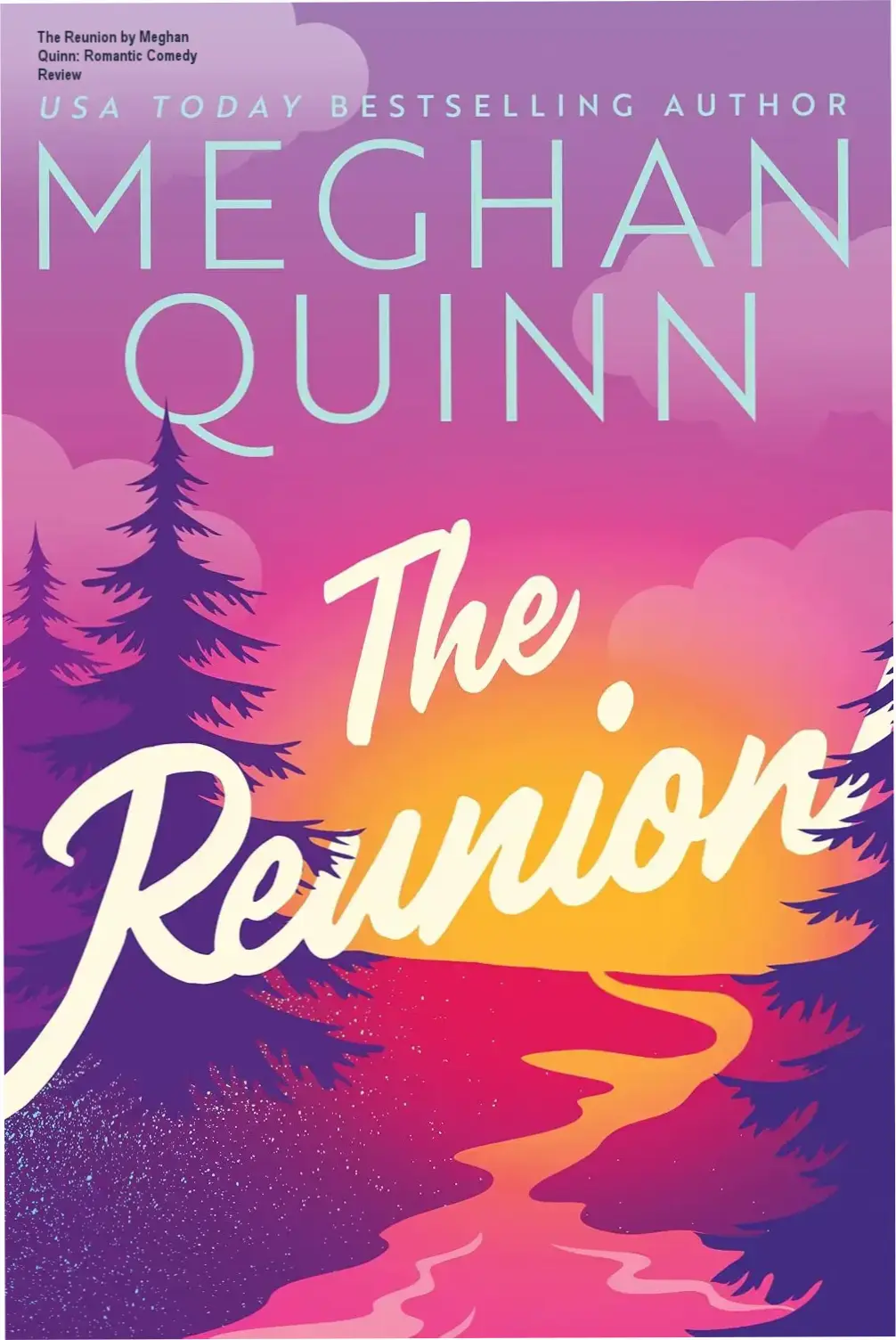
The Reunion by Meghan Quinn: Romantic Comedy Review

Family dynamics are messy enough without a milestone anniversary forcing everyone back under one roof. You know the drill: the high-achieving eldest masking burnout, the middle child nursing a divorce like a war wound, and the baby of the family running from commitment across time zones. Meghan Quinn takes this familiar setup and asks a sharper question—what happens when the parents’ “perfect” marriage becomes the impossible benchmark? The Reunion lands as a multi-POV romantic comedy that leans hard into the “Chance” family charm offensive.
Quinn has built a loyal following on the back of banter-heavy, small-town romance, and this 2022 Montlake release sits comfortably in that sweet spot between laugh-out-loud hijinks and genuine emotional excavation. It’s not reinventing the wheel, but it polishes the spokes until they shine. The market response—over 33,000 Amazon ratings averaging 4.3 stars—signals it hit the comfort-read nerve dead center. Readers showed up for the sibling rivalry and stayed for the surprisingly tender look at parental legacy.
Ready to dive into “The Reunion”?
Explore available editions, check current live pricing, or download a free sample directly on Amazon.
Preview Free Sample & Check Price on Amazon
*You will be redirected to Amazon. As an Amazon Associate, we may earn from qualifying purchases.
Writing Style, Banter Rhythm & Pacing Reality
Quinn writes dialogue like a tennis match—fast, aggressive, and deeply satisfying when the rally lands. The “Quinn Voice” is distinct: self-deprecating internal monologues clashing with razor-sharp external quips. Ford’s chapters drip with grumpy, repressed tension. Cooper brings the chaotic energy of a man unraveling. Palmer offers the flighty, vulnerable counterbalance.
Pacing follows the classic rom-com arc but stretched across three simultaneous love stories. That’s the structural risk. The first 30% is heavy table-setting. Some readers on Goodreads flagged the opening as “slow” because the romantic inciting incidents stagger rather than sync. Once the party planning kicks into gear, the momentum locks in. The “party” acts as a hard deadline, forcing proximity and decisions.
Steam level sits at “open door but tasteful.” It services the emotional connection rather than replacing it. Kindle highlights cluster around the banter exchanges, not the bedroom scenes. That tells you the reader value proposition: wit over heat.
Narrative Structure: Three Novels in One Binding
The triple-POV structure is the book’s engine and its occasional bottleneck. Each sibling gets a full romantic arc: Grumpy/Sunshine (Ford), Second Chance (Cooper), and Strangers-to-Lovers/Small Town Doctor (Palmer). Quinn rotates chapters strictly. You get 50-60 pages per POV before switching.
This works if you love all three tropes. It drags if you only care about one couple. Reddit threads in r/RomanceBooks often debate “skipping chapters” for the least favorite sibling. Cooper’s arc—reconnecting with his ex-wife’s feisty baker sister—generates the most polarized feedback. Some call it the emotional core; others find the “ex-wife adjacent” dynamic icky regardless of the divorce context.
The parents, Martin and Peggy, aren’t just background props. Their 50th-anniversary chapters (interspersed as flashbacks) provide the thematic thesis: love is a daily choice, not a lightning strike. It’s a smart structural device that elevates the book above standard “three siblings find love” fare.
Character Arcs: Performance vs. Intimacy
Ford Chance is the standout. The “eldest son burden” is written with surgical precision. He manages the family business, the party logistics, and everyone’s feelings while refusing to admit he wants the girl—his childhood best friend, obviously. His breakdown moment isn’t a grand gesture; it’s a quiet admission of exhaustion. That restraint earns the payoff.
Cooper’s journey from “divorced cynic” to “open-hearted partner” feels the most earned because it’s the messiest. He regresses. He lashes out. He bakes terrible pies as therapy. Readers on Amazon frequently cite him as the “most relatable” because his healing isn’t linear.
Palmer’s arc suffers slightly from “traveler returns home” shorthand. Her conflict—fear of roots vs. the hot doctor—resolves quickly once she stops running. The chemistry with Dr. Benedict is instant and high-voltage, but the internal conflict resolution feels rushed compared to her brothers’ 400-page slogs.
Tropes Execution: Comfort Food Cooked by a Pro
Quinn doesn’t subvert tropes; she executes them at a masterclass level. The “Grumpy x Sunshine” with Ford and Rosie benefits from years of shared history—the “why now?” is answered by the anniversary pressure cooker. The “Second Chance” for Cooper avoids the “miscommunication could be solved by one conversation” trap by rooting the conflict in genuine trauma and identity shifts post-divorce.
The “Small Town Doctor” trope for Palmer gets a refresh: Benedict isn’t just a
Who Should Read This (And Who Should Skip It)
If you treat romance novels as palate cleansers between heavy non-fiction or literary fiction, this is a premium pour. Quinn writes “comfort food with nutrients”—the banter is sharp enough to satisfy literary snobs, but the emotional beats land hard enough for genre purists.
Ideal reader: Someone who loves the “found family” dynamic, enjoys dual POV structures across multiple couples, and wants a small-town setting that feels lived-in rather than staged. The sibling dynamic is the engine here; the romances are the wheels.
Skip it if: You dislike “miscommunication as plot device” tropes. Two of the three couples rely heavily on characters not having a five-minute conversation that would resolve the conflict. If that makes you want to throw your Kindle, save your money.
Common misstep: Buying this expecting three distinct, fully fleshed-out novellas. It’s one braided narrative. Palmer’s arc gets the most page time; Cooper’s feels slightly rushed in the third act. Ford’s is the slow burn. Go in knowing the pacing is uneven by design.
Value Proposition: Hardcover vs. Kindle vs. Audio
At 429 pages, the Kindle edition ($9.99 list, frequently on sale for $3.99–$4.99) is the sweet spot. The prose is clean—no formatting nightmares. The audiobook (narrated by a full cast including Teddy Hamilton and Andi Arndt) adds significant texture; the sibling arguments hit differently when you hear the overlapping dialogue. If you commute, the audio version justifies the credit.
Hardcover only makes sense if you’re a Quinn completionist who wants the spine on the shelf. The paper quality is standard Montlake—functional, not gift-edition premium.
Contextual FAQ
- Do I need to read The Wedding Game first? No. Shared universe, standalone plot. Easter eggs only.
- Spice level? Moderate. Closed-door to fade-to-black. High emotional intimacy, low explicit mechanics.
- Trigger warnings? Divorce aftermath (Cooper), parental aging/health anxiety (background), abandonment issues (Palmer). Handled with care, not gratuitous.
Bottom line: This is a high-floor, medium-ceiling read. It won’t change your worldview, but it executes its specific brief—”make me feel warm and entertained for six hours”—with professional precision. You can check current pricing and reader sentiment here.
Final Editorial Verdict
“The Reunion” delivers on its core promise for its intended audience, offering compelling insights without fluff. As highlighted in our detailed edition breakdown, its practical depth and readability are its greatest strengths.
We also recommend checking the official Kindle sample and reader ratings before making your final purchase decision.
*You will be redirected to Amazon. As an Amazon Associate, we earn from qualifying purchases.

“Marketing de Conteúdo + Desenvolvimento Web = presença digital que gera valor.”