Most of us carry a mental list of “unfinished stories”—the career we didn’t pursue, the apology we never sent, or the dream we shelved for the sake of stability. We treat these gaps as failures, but in reality, they are the silent anchors that keep us from moving forward.
For the modern reader, the appeal of “books about books” isn’t just about a love for paper and ink; it is a search for a sanctuary. We look for narratives that validate our desire to escape the noise of a digital world and rediscover a sense of tangible, slow-paced magic. You can check the current reader reception and availability of The Secret Library to see if it fits your current mood.
Amanda James enters a crowded market of “cozy fantasy” and magical realism, where the stakes are often internal rather than epic. The challenge for any author in this genre is avoiding the trap of becoming overly saccharine. The reader expects a warm hug, but they still need a narrative spine that holds the emotional weight of grief and legacy without collapsing into cliché.
Ready to dive into “The Secret Library”?
Explore available editions, check current live pricing, or download a free sample directly on Amazon.
*You will be redirected to Amazon. As an Amazon Associate, we may earn from qualifying purchases.
The “Cozy” Architecture: Setting and Atmosphere
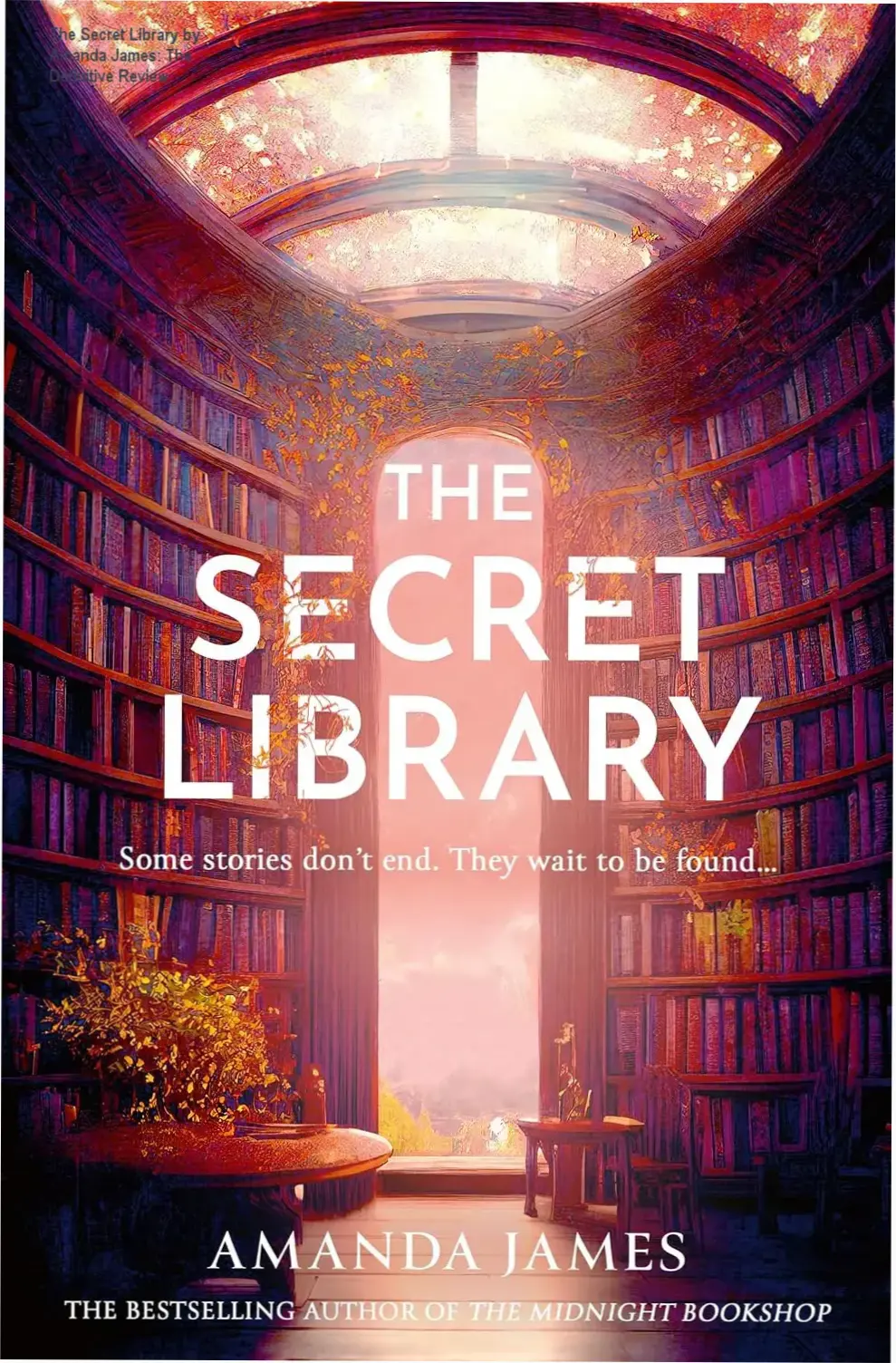
The story centers on Lucy Thomas, a book editor who inherits a windswept home in Cornwall. This is a classic trope for a reason: the rugged coastline of Cornwall provides the perfect atmospheric contrast to the warmth of a sun-drenched library.
James doesn’t just describe a room; she builds a sanctuary. The spiral staircase and the “battered box of unfinished stories” serve as physical metaphors for the layers of memory and regret that Lucy must peel back.
From a technical standpoint, the pacing is designed for “curling up.” It doesn’t rush. It lingers on the sensory details—the smell of old paper, the quality of the light—which caters specifically to the “Slow Living” movement currently trending among bibliophiles.
“The perfect book to curl up with, whether beach or fireside.”
This quote from Celia Anderson summarizes the product’s market positioning. It is not a high-tension thriller; it is a low-cortisol experience designed to lower the reader’s heart rate.
The Mechanics of Magical Realism
The “magic” in The Secret Library is subtle. It doesn’t rely on complex hard-magic systems or world-building manuals. Instead, it uses magic as a catalyst for emotional breakthroughs.
The core premise—finishing stories left undone by a grandmother—is a clever narrative device. It allows the author to weave multiple sub-plots (the unfinished stories) into the main character’s arc of self-discovery.
Skeptics might argue that this is a “safe” plot. However, the strength lies in the execution. James blends the fantastical elements with the mundane realities of grief and familial obligation, making the magic feel earned rather than forced.
Feature
Analysis
Impact
Narrative Pace
Deliberate and rhythmic
High comfort, low stress
Magic Style
Soft/Metaphorical
Emotional resonance
Who Is This Book Actually For?
The Secret Library isn’t for everyone. It targets a very specific psychological profile: the “comfort seeker.”
If you enjoy the “cozy” aesthetic—think rainy afternoons, oversized sweaters, and the smell of old paper—this is your territory. It appeals strongly to bibliophiles who treat books not just as stories, but as sanctuaries.
The ideal reader is someone looking for emotional catharsis rather than a complex plot puzzle. It’s designed for those who appreciate magical realism where the “magic” serves as a metaphor for healing and self-discovery.
Who Should Skip This Book?
Avoid this title if you are in the mood for high-stakes tension or rigorous world-building. If you prefer hard fantasy with strict laws of magic or a fast-paced psychological thriller, you will likely find the pacing too languid.
Skeptics of the “heartwarming” genre may find the tone overly sentimental. If you despise “happily-ever-after” trajectories or stories that prioritize atmosphere over conflict, this will feel like fluff.
Value for Money & Realistic Expectations
At 352 pages, the length is balanced. It provides enough depth to establish the Cornish atmosphere without overstaying its welcome.
Common Purchasing Misstep: Don’t buy this expecting a “life hack” manual or a fast-paced mystery. This is a slow-burn narrative. The value here isn’t in the “what happens next,” but in “how it feels while reading.”
From a technical standpoint, the high ratings on Goodreads and Amazon suggest a consistent delivery on the “cozy” promise. You are paying for a specific mood—emotional warmth and escapism.
Quick Editorial FAQ
Is it a standalone? Yes, though it carries the thematic DNA of Amanda James’ previous works.
Is the magic system complex? No. It’s intuitive and atmospheric, not technical.
Reading time? Moderate. It’s a “weekend retreat” type of book.
Ultimately, The Secret Library is a safe bet for fans of magical realism who want to feel better about the world. It doesn’t reinvent the genre, but it executes the “healing through books” trope with precision. To see if the current pricing fits your budget or to read unfiltered customer experiences, you can check the latest reader reviews on Amazon.
Final Editorial Verdict
“The Secret Library” delivers on its core promise for its intended audience, offering compelling insights without fluff. As highlighted in our detailed edition breakdown, its practical depth and readability are its greatest strengths.
Returning to a life that no longer fits is a specific kind of torture. Most people view “going home” as a sanctuary, but for those who have endured profound trauma, the familiar streets of a small town can feel like a cage built from memories. Readers diving into Into the Fading Twilight aren’t just looking…
Most people spend their adult lives chasing a version of “normalcy”—a degree, a stable job, a quiet home, and perhaps a pet. It is the safe bet, the blueprint for a predictable existence. But for those who have tasted the intoxicating, high-stakes world of power imbalances and luxury, the transition back to mediocrity often feels…
The romantasy shelf is crowded. Brutally crowded. You know the drill: a fallen noblewoman, a tournament with lethal stakes, and the brooding prince who ruined her life standing across the arena. It is the genre’s comfort food, but comfort food becomes stale fast if the seasoning is off. Readers are rightfully skeptical; we have all…
We are conditioned to believe that the wedding is the climax, not the prologue. The cultural script insists that once the vows are spoken, the narrative tension evaporates into domestic bliss. Freida McFadden’s latest thriller, The Divorce, grabs that comfortable assumption by the throat and drags it through the mud. It poses a question that…
We need to produce the first part of a professional analytical book review for the book “{{BOOK_TITLE}}” by {{AUTHOR_NAME}}. Must be English only. Must start with a paragraph of contextualization (180-320 words). Must include exactly 1 contextual affiliate link in the first or second paragraph using the tag “Link_afiliado”. The link must be exactly the…
We often approach epic mythology as a collection of static statues and rigid archetypes—larger-than-life heroes whose emotions are secondary to their divine destiny. We read the classics to learn history or legend, but we rarely expect them to mirror the messy, fragile vulnerability of modern human connection. Madeline Miller’s “The Song of Achilles” shatters this…
Utilizamos cookies para garantir que lhe proporcionamos a melhor experiência no nosso site. Se você continuar a usar este site, assumiremos que você está satisfeito com ele.