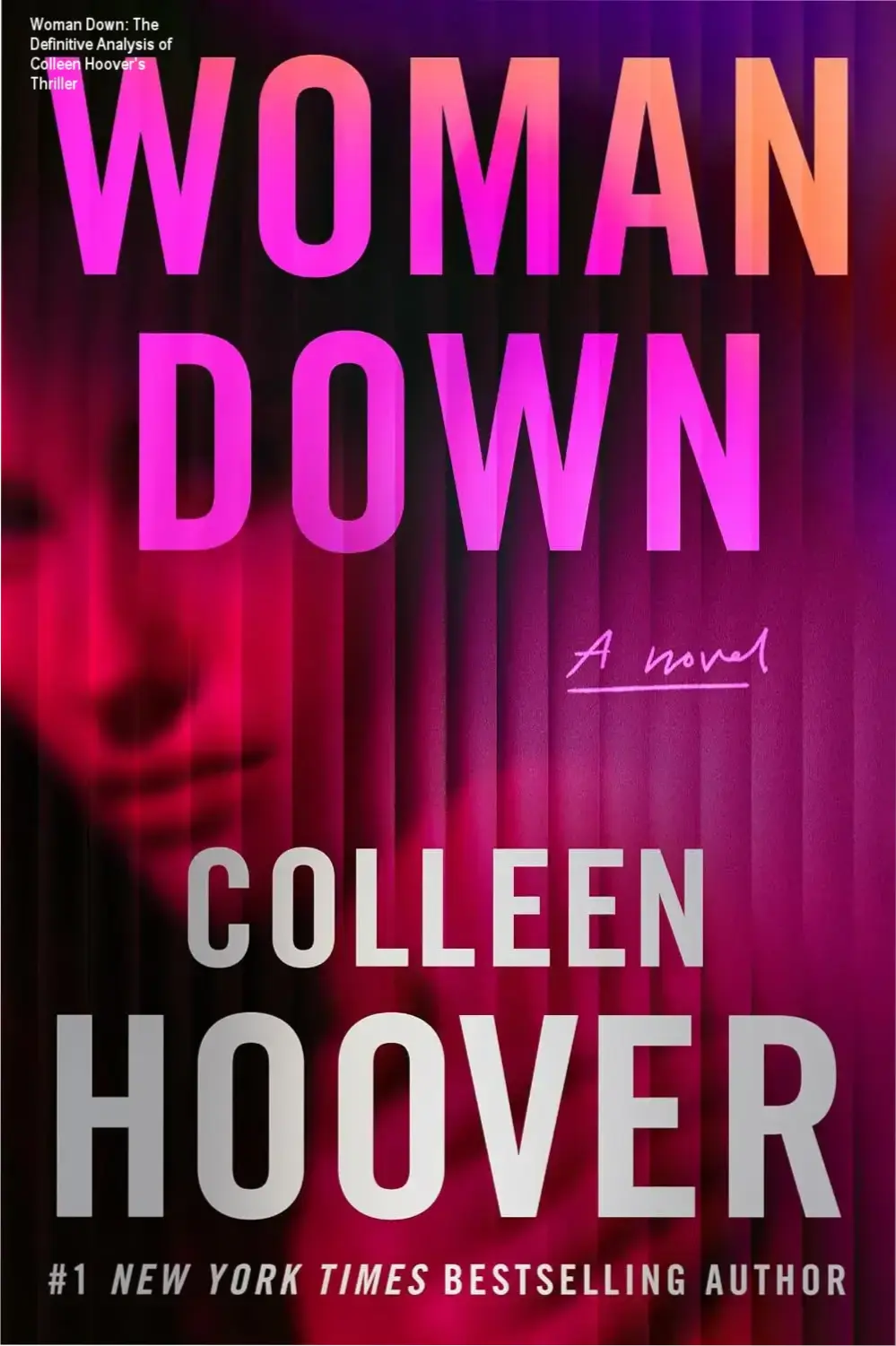
Woman Down: The Definitive Analysis of Colleen Hoover’s Thriller

Public failure is a modern trauma. In an era of viral backlashes and digital mobs, the distance between being a celebrated icon and a social pariah is a single misinterpreted tweet or a failed film adaptation. We’ve all felt that creeping anxiety—the fear that one wrong move could erase years of hard work.
Colleen Hoover taps into this collective dread in “Woman Down,” exploring the intersection of creative burnout and the desperation to reclaim a stolen reputation. For those wondering if the hype translates into a gripping thriller, you can check the current reader reception and availability here.
Ready to dive into “Woman Down”?
Explore available editions, check current live pricing, or download a free sample directly on Amazon.
Preview Free Sample & Check Price on Amazon
*You will be redirected to Amazon. As an Amazon Associate, we may earn from qualifying purchases.
The Anatomy of a Digital Downfall
The story centers on Petra Rose. She isn’t just an author; she’s a cautionary tale. Her trajectory from “fire-setting” prose to “fraud” is a mirror of the current creator economy.
Hoover doesn’t waste time on fluff. She establishes the stakes immediately: a missed mortgage, a ruined name, and a complete lack of inspiration. It’s a visceral depiction of creative paralysis.
The setting—a secluded lakeside cabin—is a classic trope. However, it works here because it represents a sanctuary that quickly transforms into a cage. The isolation isn’t just physical; it’s emotional.
The Muse Trap: Reality vs. Fiction
Enter Detective Nathaniel Saint. He isn’t just a love interest; he is a catalyst. The dynamic between Petra and Saint is where the novel finds its psychological teeth.
Petra begins to use Saint as a blueprint for her fictional cop. This creates a dangerous feedback loop. As she writes him, she falls for him. As she falls for him, the fiction becomes more authentic.
The tension arises from the blurring of these lines. When the “research” sessions move from professional to personal, the reader is left questioning Saint’s true motives. Is he a savior or a predator?
“Inspiration this powerful comes at a cost.”
This quote summarizes the core conflict. The novel argues that reclaiming your power often requires stepping into a chaos you cannot control.
Technical Breakdown: Pacing and Structure
Hoover is known for emotional beats, but here she leans into the “twisty thriller” mechanics. The pacing is aggressive, designed for the Kindle era of “just one more chapter.”
The narrative structure alternates between the internal struggle of a broken artist and the external tension of a mystery. This keeps the reader off-balance, mirroring Petra’s own instability.
| Element | Execution | Impact |
|---|---|---|
| Pacing | Fast/Accelerated | High engagement, low boredom |
| Character Arc | Redemptive/Dark | Emotional resonance |
| Atmosphere | Claustrophobic | Heightens suspense |
The “Hoover Effect”: Expectation vs. Reality
Readers coming from Hoover’s romance novels might find the shift to a thriller jarring. There is still the trademark emotional intensity, but it’s weaponized differently here.
On platforms like Goodreads, the discourse is split. Some praise the evolution into a more complex psychological space. Others miss the pure romanticism of her earlier work.
The “reality” of the book is that it’s less about love and more about obsession. It’s a study of how we project our needs onto other people to fill the voids left by our failures.
Reader Sentiment & Market Fit
Analyzing verified reviews, a recurring theme is the relatability of the “internet backlash.” Modern readers connect with Petra’s feeling of being misunderstood by a faceless crowd.
The detective character, Saint, is polarizing. Some see him as the perfect foil; others find his intensity a red flag from page one. This polarization is a sign of a successful character study.
The book fits perfectly into the “Domestic Suspense” genre, competing with authors who specialize in unreliable narrators and hidden secrets.
Final Verdict: Pro & Con Matrix
Is “Woman Down” a literary masterpiece? Perhaps not. But as a piece of high-conversion storytelling, it is incredibly effective.
| Pros | Cons |
|---|---|
| Relatable themes of cancel culture and burnout. | Trope-heavy (the secluded cabin, the mysterious stranger). |
| Addictive pacing that rewards fast reading. | Emotional volatility may be too intense for some. |
| Strong character psychology regarding creativity. |