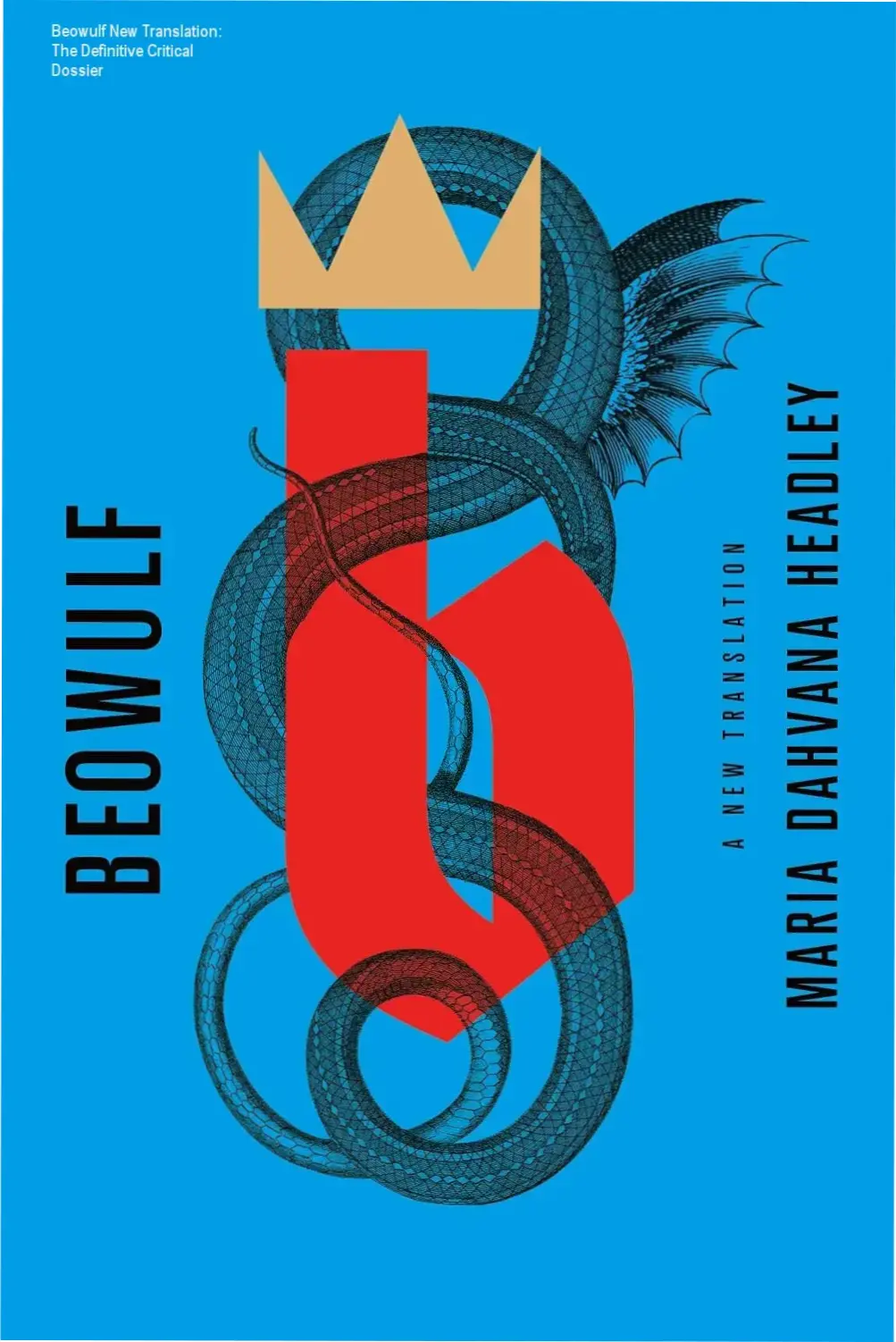
Most of us remember Beowulf as a chore. A dusty, incomprehensible slog forced upon us in high school English class, where the “epic” nature of the poem felt more like an endurance test than a literary experience. The problem wasn’t the story—it was the translation. For decades, we’ve been fed versions that prioritize academic stiffness over the raw, boastful, and violent energy of the original Old English mead halls.
Maria Dahvana Headley decides to burn that bridge. Instead of treating the text like a museum piece, she treats it like a living, breathing piece of social commentary. If you’ve ever wondered if an ancient epic could feel as immediate as a modern Twitter thread or a gritty HBO drama, you can check the current reception and availability of this translation to see how it’s disrupting the classics.
Ready to dive into “Beowulf: A New Translation”?
Explore available editions, check current live pricing, or download a free sample directly on Amazon.
*You will be redirected to Amazon. As an Amazon Associate, we may earn from qualifying purchases.
The “Bro-Culture” of the Mead Hall: Style and Pacing
Headley doesn’t just translate words; she translates vibes. The original Beowulf was essentially a series of high-stakes boasts. It was about ego, reputation, and the performative nature of masculinity in a warrior society.
Previous translations often smoothed this over with “thee” and “thou,” making it sound like a church service. Headley goes the opposite direction. She uses brash, belligerent language. She uses obscenities. She even uses social-media shorthand.
At first glance, this feels like a gimmick. A skeptic would call it “updating for the sake of updating.” But as you read, you realize the “gimmick” is actually a more honest representation of the original’s spirit. The poem was meant to be loud, aggressive, and slightly arrogant.
The pacing is electric. By stripping away the archaic clutter, the narrative moves with a novelist’s precision. You aren’t fighting the language to get to the plot; the language is the plot.
Recontextualizing the Monster: A Feminist Lens
This is where the book becomes polarizing. Headley doesn’t just change the words; she changes the gaze. She looks at the binary of “Hero vs. Monster” and asks: Who decided who was which?
In this version, Grendel isn’t just a mindless beast. He is an outsider, someone excluded from the celebratory noise of the mead hall. The “heroism” of Beowulf is reframed as a form of entitlement—powerful men seeking more power, encroaching on territories that aren’t theirs.
The female characters, often relegated to “peace-weavers” or passive prizes in older versions, are given a sharper edge. The warrior seeking to avenge her son isn’t a side plot; she’s a mirror to Beowulf’s own drive.
“Beowulf has always been a tale of entitlement and encroachment… this version brings new context to an old story.”
It’s a radical shift. It turns a story about killing monsters into a story about how society creates monsters by pushing people to the margins.
Expectation vs. Reality: The Great Divide
If you look at the numbers, there is a strange discrepancy. Amazon users love it (4.6 stars), while the “literary police” on Goodreads are more hesitant (3.5 stars). This tells you everything you need to know about the book’s target audience.
Traditionalists hate it because it doesn’t “respect” the sanctity of the original text. They see the modern slang as a desecration. But for the average reader—the one who actually wants to feel something while reading an epic—it’s a revelation.
The reality is that Beowulf was an oral tradition. It was meant to be performed, adapted, and changed to fit the audience. Headley is arguably being more faithful to the tradition of oral storytelling than the academics are.
Who Should Actually Read This Translation?
This isn’t a book for the academic purist who wants a literal, word-for-word mirror of Old English. If you are looking for a dry, museum-piece version of Beowulf, this will likely irritate you.
The ideal reader is someone who:
Values perspective over preservation: You want to see how an ancient story reflects modern power dynamics and gender roles.
Hates “stuffy” poetry: You prefer the grit of a modern novel over the rigid structures of 19th-century translations.
Is a fan of subversive retellings: If you enjoy authors who dismantle the “hero” trope to reveal the entitlement underneath, this is your version.
Who Should Skip It?
Avoid this edition if you are a linguistic traditionalist. Headley intentionally uses obscenities and social-media-inspired shorthand to bridge the gap between the “boastful” nature of the original warriors and modern culture. For some, this feels like a brilliant bridge; for others, it feels like an unnecessary intrusion of the 21st century into a timeless epic.
Value for Money: Insight vs. Tradition
From a purely technical standpoint, you are paying for a curated lens. Most translations treat Beowulf as a story of a brave man killing monsters. Headley treats it as a study of encroachment—powerful men entering spaces they don’t belong to and claiming victory over the “other.”
The value lies in the “Aha!” moments. By shifting the vocabulary, Headley makes the political undercurrents of the poem visible in a way that Seamus Heaney or J.R.R. Tolkien didn’t prioritize. You aren’t just buying a translation; you’re buying a feminist critique embedded within a poem.
Editorial Verdict
Headley’s Beowulf is a daring, sometimes abrasive, but ultimately invigorating piece of work. It strips away the “noble” veneer of the Anglo-Saxon warrior and replaces it with a raw, honest look at ego and justice. It transforms the poem from a historical curiosity into a living, breathing conversation about who gets to be called a hero.
If you’re tired of the versions that made you sleep in high school English class, it is worth seeing how this version holds up against actual reader reviews and current pricing.
Final Editorial Verdict
“Beowulf: A New Translation” delivers on its core promise for its intended audience, offering compelling insights without fluff. As highlighted in our detailed edition breakdown, its practical depth and readability are its greatest strengths.
We have all seen the movie script: a chance encounter, a night of unplanned passion, and a positive pregnancy test that flips the script on everything. It is a staple of the romance genre because it taps into a primal human curiosity about “what if” and the terrifying, exhilarating prospect of a life-altering mistake. For…
Most of us spend our lives playing a high-stakes game of “what if,” betting our time and energy on a version of success that often feels like a moving target. We chase the big win—the promotion, the city lights, the professional peak—only to realize that the higher we climb, the more isolated we become. It…
We need to output only HTML? They said write exclusively using tags , , , , , , , , , . No markdown, no H2, only H3 allowed. Must start with a of contextualization, between 180-320 words. Must include exactly 1 contextual affiliate link in first or second paragraph using tag “Link_afiliado”. They gave…
Returning to a life that no longer fits is a specific kind of torture. Most people view “going home” as a sanctuary, but for those who have endured profound trauma, the familiar streets of a small town can feel like a cage built from memories. Readers diving into Into the Fading Twilight aren’t just looking…
Most readers enter the world of dark romance seeking a safe way to explore the “forbidden.” There is a primal, psychological curiosity about the thin line between fear and attraction, a curiosity that H.D. Carlton exploits with surgical precision in the Cat and Mouse Duet. It isn’t just about a romance; it’s about the eroticization…
The romantasy shelf is crowded. Brutally crowded. You know the drill: a fallen noblewoman, a tournament with lethal stakes, and the brooding prince who ruined her life standing across the arena. It is the genre’s comfort food, but comfort food becomes stale fast if the seasoning is off. Readers are rightfully skeptical; we have all…
Utilizamos cookies para garantir que lhe proporcionamos a melhor experiência no nosso site. Se você continuar a usar este site, assumiremos que você está satisfeito com ele.