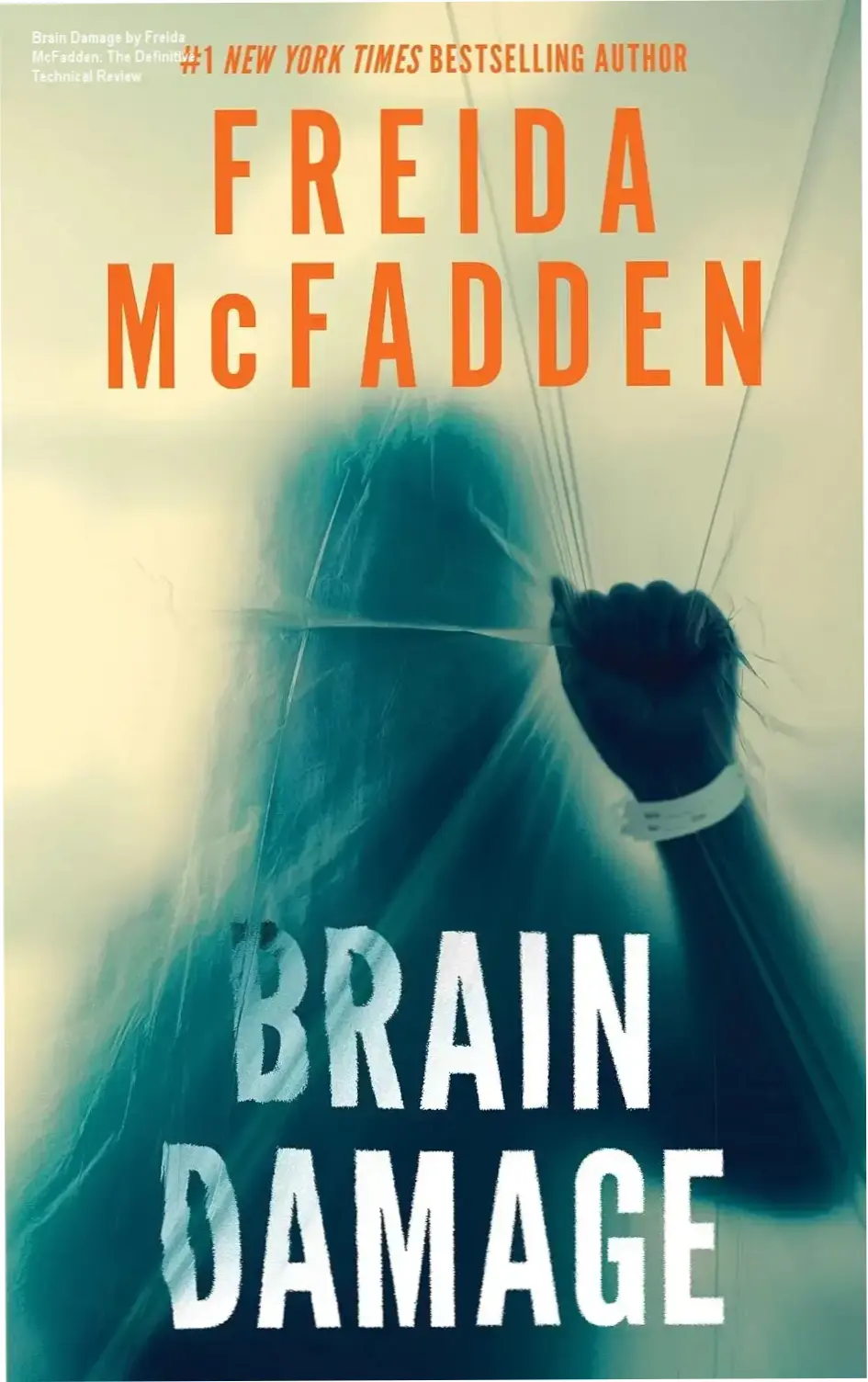
Brain Damage by Freida McFadden: The Definitive Technical Review

Trust is a fragile currency. We spend years building it with partners and friends, only to realize that memory is an unreliable narrator. When you lose your memory, you don’t just lose your past; you lose your primary defense mechanism against those who wish you harm.
For readers of psychological thrillers, the “amnesia trope” is often a gamble. It either delivers a masterclass in tension or falls flat with predictable twists. In Brain Damage, Freida McFadden leverages this vulnerability to create a claustrophobic atmosphere where the protagonist’s own mind is the enemy.
Ready to dive into “Brain Damage”?
Explore available editions, check current live pricing, or download a free sample directly on Amazon.
Preview Free Sample & Check Price on Amazon
*You will be redirected to Amazon. As an Amazon Associate, we may earn from qualifying purchases.
The Anatomy of Pacing: The McFadden Method
Freida McFadden doesn’t write books; she writes hooks. The narrative structure of Brain Damage is designed for the modern, distracted reader. It moves with a surgical precision that mirrors the protagonist’s medical background.
The story starts with a “bang”—literally. Dr. Charly McKenna goes from a peak existence (Central Park views, thriving practice) to a total void. This immediate contrast creates an instant emotional vacuum that pulls the reader in.
The pacing is aggressive. McFadden utilizes short chapters and cliffhangers that practically forbid you from putting the book down. It’s a calculated strategy to maintain high cortisol levels throughout the reading experience.
However, a skeptical reader might find the speed suspicious. When a plot moves this fast, there is often a risk of plot holes. But here, the speed serves the amnesia plot; we are racing Charly to recover her memories before the killer strikes again.
| Technical Aspect | Performance | Impact on Reader |
|---|---|---|
| Narrative Velocity | High/Aggressive | Eliminates boredom; creates urgency. |
| Chapter Length | Short/Fragmented | Encourages “just one more chapter” habit. |
| Atmosphere | Claustrophobic | Increases paranoia and distrust. |
Fractured Memory as a Plot Device
The core of the book is the “jagged edges” of Charly’s memory. McFadden uses the brain injury not just as a backstory, but as a filter. We only know what Charly knows, which is almost nothing.
This creates a unique power dynamic. The reader becomes a detective alongside the protagonist. Every fragment of memory—a scent, a face, a phrase—is treated like a piece of forensic evidence.
The psychological tension arises from the gap between who Charly was (a successful doctor) and who she is (a patient unable to speak or walk). This loss of agency is the most terrifying part of the book.
“How can you survive when you can’t remember who wants you dead?”
This question isn’t just a marketing hook; it’s the thematic engine of the novel. It explores the terrifying possibility that our identity is tied entirely to our memories. Without them, we are open books for others to rewrite.
Who Should Actually Read This?
Brain Damage isn’t for the literary purist seeking a slow-burn character study. It is precision-engineered for the “one more chapter” reader.
You will likely enjoy this if you gravitate toward psychological thrillers where the protagonist is their own worst enemy. If you appreciate the “unreliable narrator” trope—specifically when memory loss is used as a narrative weapon—this fits your profile perfectly.
Who Should Skip It
Avoid this book if you are exhausted by the amnesia plot device. While McFadden executes it with professional efficiency, the “who am I and who wants me dead” premise is a staple of the genre.
Also, skip this if you prefer hard-boiled detective stories with linear clues. This is a mental puzzle, not a forensic investigation.
Common Purchasing Missteps
The most frequent mistake readers make is expecting a medical drama. Despite the protagonist being a dermatologist and the setting being a rehab hospital, this is not a clinical study on brain trauma.
It is a high-tension thriller. Do not buy this expecting a technical exploration of neurology; buy it for the twists and the psychological claustrophobia.
Quick Analytical FAQ
- Is it a standalone? Yes, it functions as a complete narrative arc.
- How is the pacing? Aggressive. McFadden avoids the “middle-book slump” common in 300+ page thrillers.
- Is the ending predictable? For seasoned thriller readers, some breadcrumbs are visible, but the “knockout punch” mentioned by critics usually lands.
Editorial Verdict: Value for Money
At 384 pages, the value proposition is high. You aren’t paying for fluff or excessive descriptions. You are paying for a tightly wound plot that respects your time.
The book succeeds because it transforms a common trope into a visceral experience of paranoia. If you want a weekend read that keeps you guessing until the final pages, it is a safe investment. You can verify the latest reader ratings and pricing on Amazon to see if it aligns with your current reading budget.
Final Editorial Verdict
“Brain Damage” delivers on its core promise for its intended audience, offering compelling insights without fluff. As highlighted in our detailed edition breakdown, its practical depth and readability are its greatest strengths.
We also recommend checking the official Kindle sample and reader ratings before making your final purchase decision.
*You will be redirected to Amazon. As an Amazon Associate, we earn from qualifying purchases.

“Marketing de Conteúdo + Desenvolvimento Web = presença digital que gera valor.”