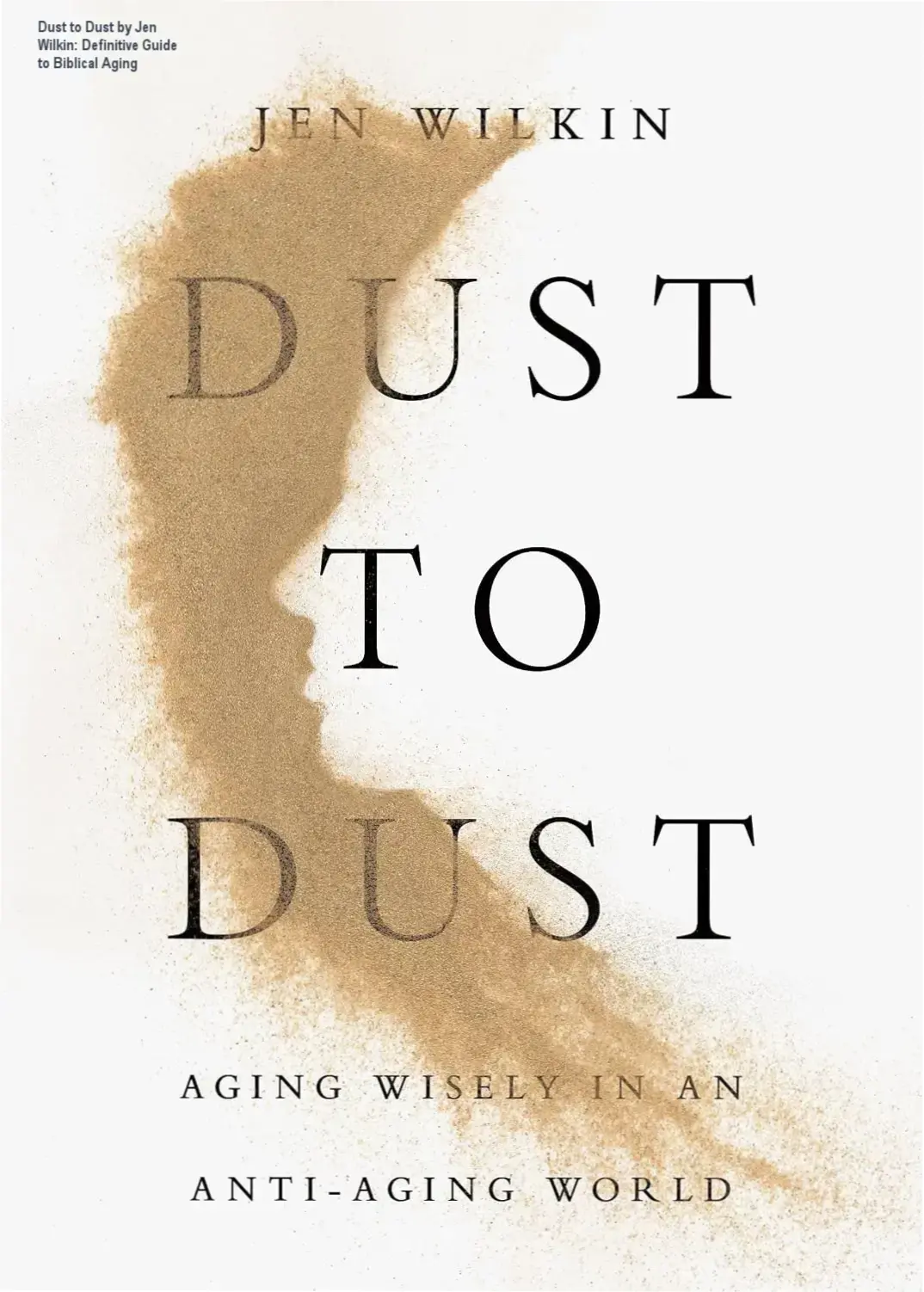
Dust to Dust by Jen Wilkin: Definitive Guide to Biblical Aging

We live in a culture that treats a wrinkle like a moral failure. From multi-billion dollar skincare industries to the subtle social erasure of the elderly, the narrative is clear: aging is a steep descent into irrelevance. Most of us spend our prime years fighting a losing battle against time, terrified that our value expires the moment our productivity dips.
Jen Wilkin enters this fray not with a new cream, but with a theological wrecking ball. In “Dust to Dust: Aging Wisely in an Anti-Aging World,” she challenges the modern obsession with youth and proposes a biblical framework where aging is an ascent in value, not a decline. You can check the current reader reception and availability to see how this perspective is shifting the conversation within the Christian community.
Ready to dive into “Dust to Dust: Aging Wisely in an Anti-Aging World”?
Explore available editions, check current live pricing, or download a free sample directly on Amazon.
Preview Free Sample & Check Price on Amazon
*You will be redirected to Amazon. As an Amazon Associate, we may earn from qualifying purchases.
The Anti-Aging Lie and the Biblical Pivot
The central premise of Wilkin’s work is a direct attack on the “anti-aging mindset.” She argues that when we fight aging, we aren’t just fighting biology; we are fighting God’s design. This is a bold claim in a world where “age-defying” is the gold standard of beauty and success.
Wilkin doesn’t offer platitudes. She acknowledges the pain of physical decline, the frustration of diminishing abilities, and the grief of loss. However, she pivots the conversation from “how do I stop this?” to “what is God doing through this?”
For the reader, this shift is jarring but necessary. The book strips away the vanity of the modern age and replaces it with the pursuit of biblical wisdom. It’s not about pretending aging is easy; it’s about recognizing that it is purposeful.
By reframing the narrative, Wilkin suggests that the second half of life isn’t a “waiting room” for death, but a distinct stage of growth. This is where the book gains its momentum, moving from a critique of culture to a manual for spiritual endurance.
The Symmetry of Life: The Chiastic Approach
One of the most intellectually stimulating aspects of “Dust to Dust” is Wilkin’s use of the chiastic poem metaphor. For those unfamiliar, a chiasmus is a literary structure where ideas are presented in one order and then repeated in reverse order, creating a symmetrical pattern.
Wilkin applies this to the human experience. She draws poetic parallels between the vulnerabilities of infancy and the dependencies of old age. The helplessness of a newborn mirrored by the needs of the elderly isn’t presented as a tragedy, but as a divine symmetry.
This structure helps the reader visualize the “arc of life” not as a straight line ending in a cliff, but as a complete circle. It validates the value of every stage, arguing that the “give-and-take” design of God is present from birth to the grave.
This analytical approach prevents the book from becoming a mere devotional. It becomes a study on the nature of existence. It forces the reader to ask: if the beginning of life was a gift despite the helplessness, why is the end of life viewed as a curse?
| Technical Feature | Who Should Actually Read This Book?
Dust to Dust isn’t a generic “how to age gracefully” guide. It is a theological framework. The ideal reader is a Christian—regardless of age—who feels the crushing weight of a culture that equates youth with value and aging with obsolescence. It is particularly potent for:
Who Should Skip It?Let’s be honest: this book will frustrate certain readers. You should probably pass on this if: You are looking for bio-hacking tips, skincare routines, or medical advice on how to slow down the clock. Jen Wilkin isn’t teaching you how to fight aging; she is teaching you how to stop fighting it. Similarly, if you prefer secular psychology or a purely clinical approach to gerontology, the heavy reliance on Scripture and the “chiastic poem” metaphor will likely feel too restrictive for your taste. Common Purchasing MisstepsThe biggest mistake buyers make is expecting a quick-fix manual. This is a “Biblical Meditation.” That means it requires slow reading and reflection. If you buy this expecting a list of “10 Tips for a Happy Retirement,” you’ll be disappointed. Instead, you get a deep, poetic analysis of the arc of life. It’s an investment in mindset, not a checklist for lifestyle changes. Quick Analysis FAQ
Editorial Verdict: Is It Worth It?From a value-for-money perspective, 208 pages of focused, fluff-free theological insight is a steal. Wilkin avoids the repetitive padding common in the genre. She delivers a concise, punchy argument that shifts the reader’s perspective from “loss” to “increasing value.” It is a rare book that manages to be both comforting and challenging. If you are tired of the cultural lie that your value expires at 50, this is an essential read. You can verify current pricing and read unfiltered user experiences via the official product page on Amazon. Final Editorial Verdict“Dust to Dust: Aging Wisely in an Anti-Aging World” delivers on its core promise for its intended audience, offering compelling insights without fluff. As highlighted in our detailed edition breakdown, its practical depth and readability are its greatest strengths. We also recommend checking the official Kindle sample and reader ratings before making your final purchase decision. *You will be redirected to Amazon. As an Amazon Associate, we earn from qualifying purchases.  “Marketing de Conteúdo + Desenvolvimento Web = presença digital que gera valor.” |
|---|