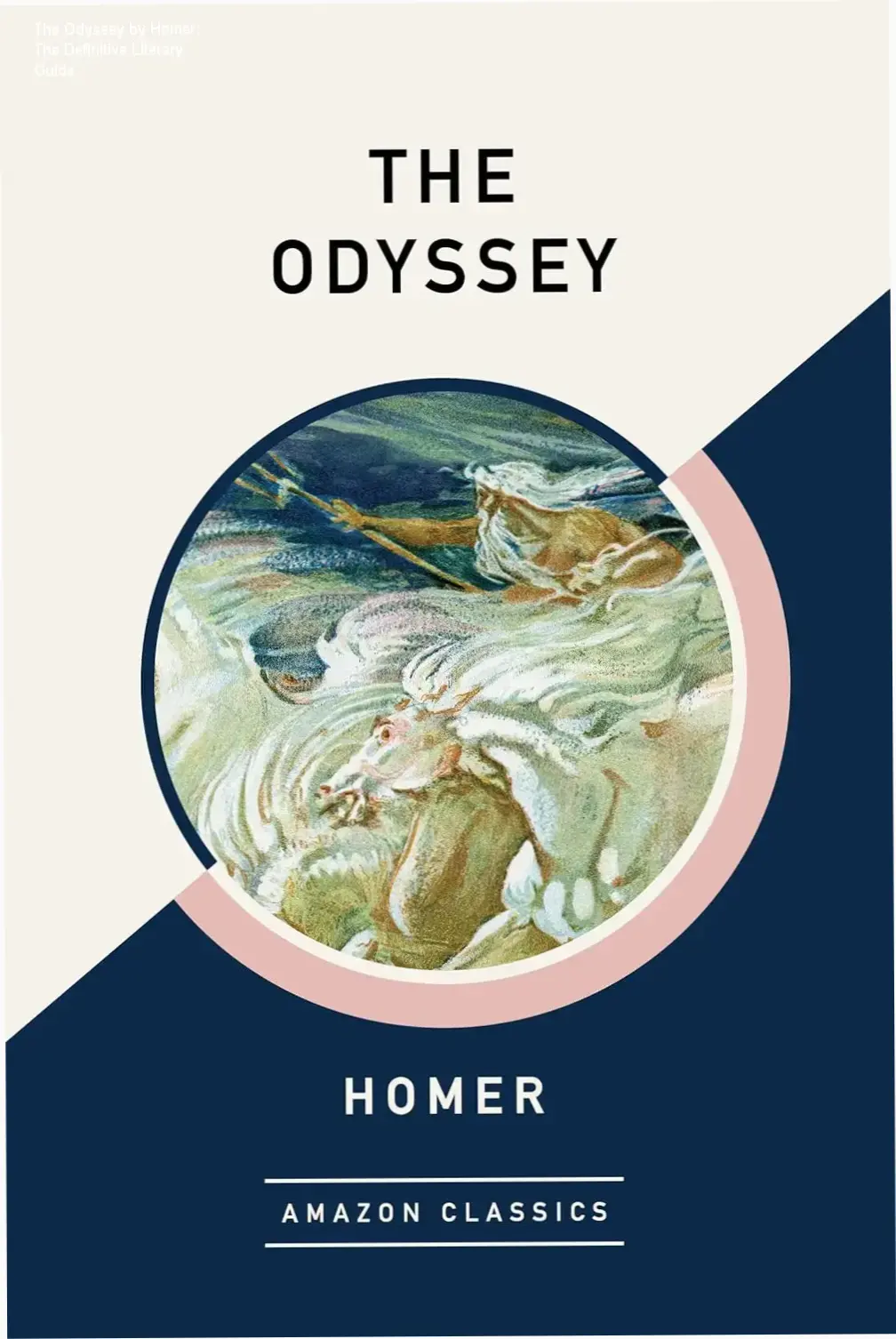
The Odyssey by Homer: The Definitive Literary Guide

Most people use the word “odyssey” to describe a long trip or a challenging project. But few actually sit down with the source material to understand why this specific journey defined the Western concept of endurance and homecoming.
The modern reader often approaches Homer with a mix of reverence and dread, fearing a dry, academic slog. However, the core of this story isn’t about ancient history; it is a raw study of survival, psychological warfare, and the desperate desire to reclaim a life that was stolen by time and ego. You can check the current reader reception on Amazon to see how this specific AmazonClassics edition holds up against modern expectations.
Ready to dive into “The Odyssey”?
Explore available editions, check current live pricing, or download a free sample directly on Amazon.
Preview Free Sample & Check Price on Amazon
*You will be redirected to Amazon. As an Amazon Associate, we may earn from qualifying purchases.
The Translation Gamble: Alexander Pope’s Influence
When picking up an epic, the translator is more important than the author. Homer wrote in an oral tradition; he didn’t “write” in the modern sense. He composed for performance.
This AmazonClassics edition uses the Alexander Pope translation. Pope was a master of the 18th-century English language, and it shows. His style is polished, rhythmic, and intentionally grand.
For a skeptical reader, this is a double-edged sword. On one hand, the prose is elegant. On the other, it can feel overly formal, sometimes masking the visceral, gritty nature of the original Greek myths.
If you are looking for a “street-level” translation that feels like a modern novel, Pope might feel too stiff. But if you want the “epic” feel—the sense of timelessness and nobility—this version delivers exactly that.
Many readers on forums like Reddit argue that Pope’s version transforms the story into a piece of art rather than just a narrative. It’s less about “what happened” and more about “how it felt to be a hero.”
| Feature | Alexander Pope Translation | Modern Prose Translations |
|---|---|---|
| Tone | Formal, Poetic, Grandiose | Direct, Conversational, Raw |
| Pacing | Slower, focused on imagery | Faster, focused on plot |
| Accessibility | Requires more focus/effort | Easier for casual readers |
Narrative Structure: The Art of the Hook
Homer doesn’t start at the beginning. He starts “in media res”—in the middle of things. We meet Odysseus when he is already exhausted, trapped on an island, and nearly defeated.
This is a brilliant CRO (Conversion Rate Optimization) move for a story. By starting at the breaking point, Homer forces the reader to ask: “How did he get here?”
The story then unfolds through massive flashbacks. Odysseus narrates his own adventures to the Phaeacians, turning the book into a story-within-a-story.
This structure prevents the “travelogue” fatigue. Instead of a linear list of monsters, the narrative feels like a confession. It adds a layer of psychological depth to Odysseus.
We see him not just as a warrior, but as a storyteller who knows exactly how to manipulate his audience to get what he wants.
Wit Over Weaponry: The Core Value Proposition
The central theme of The Odyssey is the triumph of metis (cunning intelligence) over bie (brute force).
In the Iliad, the hero is Achilles—a killing machine. In The Odyssey, the hero is a man who survives by lying,
Who This Edition Is Actually For
This version of The Odyssey isn’t for everyone. If you are looking for a scholarly, academic text with exhaustive footnotes and historical annotations, look elsewhere. This is a streamlined experience.
The ideal reader is:
- The “Classics Curious”: Someone who wants to experience the foundation of Western literature without paying for an expensive hardcover.
- The Narrative seeker: Readers who care more about Odysseus’s struggle and wit than the linguistic nuances of Ancient Greek.
- Kindle Power Users: Those who prefer a portable, digitally optimized version of an epic poem.
Who Should Skip This Book
Avoid this specific edition if you despise formal, poetic language. Alexander Pope’s translation is legendary, but it is not modern prose. It uses a structured, rhythmic style that can feel stiff to a reader accustomed to 21st-century thrillers.
If you expect a fast-paced “action movie” plot, you will be disappointed. The Odyssey is an epic; it meanders, it repeats, and it takes its time. It is a study of patience and homecoming, not a sprint.
Value Analysis: Price vs. Depth
From a pure value perspective, the AmazonClassics edition is hard to beat. You are getting one of the most influential stories in human history for a fraction of the cost of a prestige publication.
However, the trade-off is the lack of critical apparatus. You get the story, but you don’t get the “lecture” that comes with university-grade editions. For most readers, this is a feature, not a bug. It removes the noise and leaves the myth.
Quick Reality Check (FAQ)
Is it a long read? At 284 pages, it is concise for an epic, but the dense language makes it feel longer.
Is the translation dated? Yes. Pope’s translation is a masterpiece of its time, but it requires a bit more mental effort than a contemporary translation.
Is it better than the movie versions? Always. The psychological depth of Odysseus’s cunning is lost in most adaptations.
For those weighing the pros and cons, the best way to judge the flow of Pope’s translation is to examine the current reader ratings and sample pages on Amazon.
Final Editorial Verdict
“The Odyssey (AmazonClassics Edition)” delivers on its core promise for its intended audience, offering compelling insights without fluff. As highlighted in our detailed edition breakdown, its practical depth and readability are its greatest strengths.
We also recommend checking the official Kindle sample and reader ratings before making your final purchase decision.
*You will be redirected to Amazon. As an Amazon Associate, we earn from qualifying purchases.

“Marketing de Conteúdo + Desenvolvimento Web = presença digital que gera valor.”