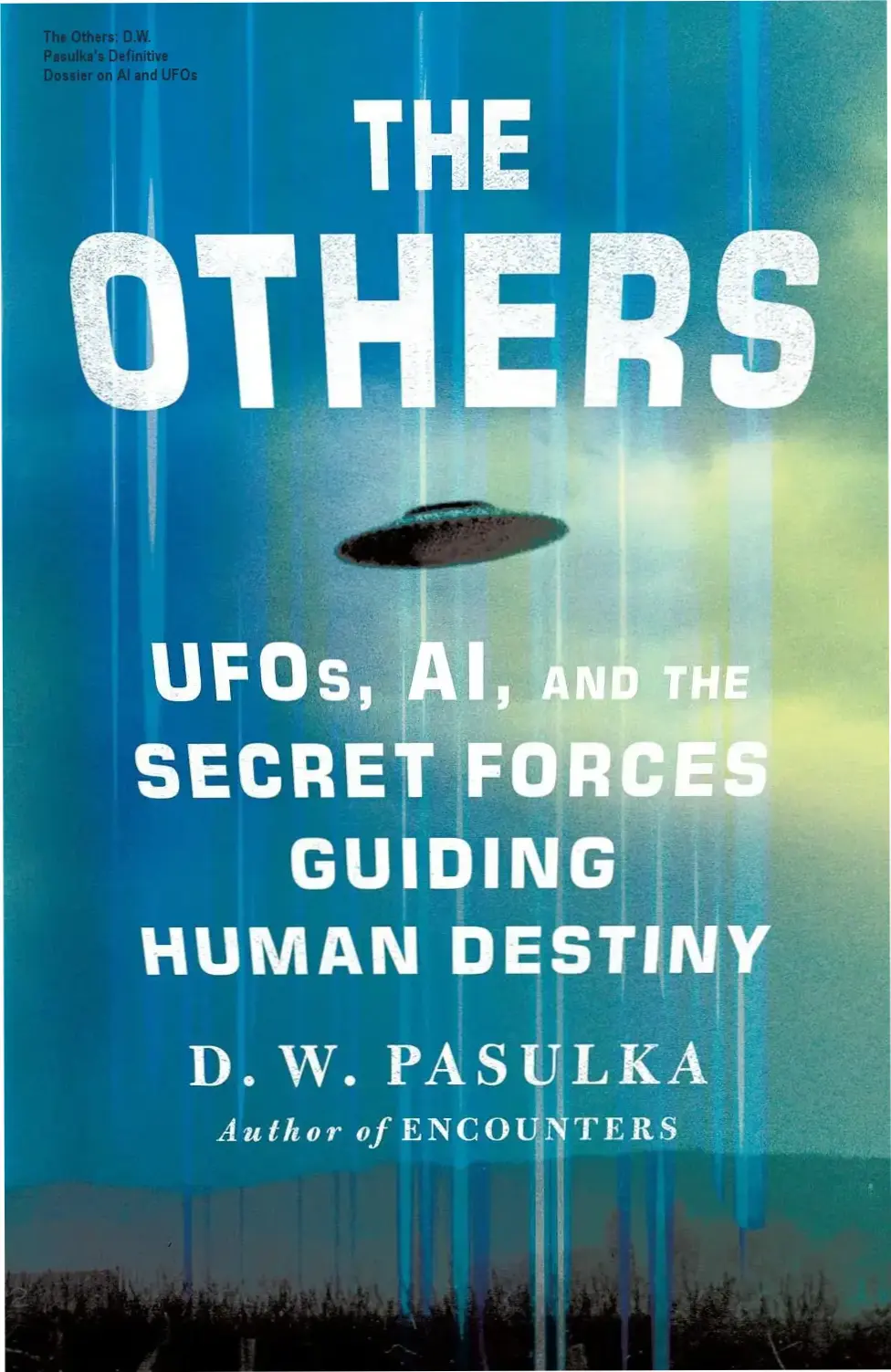
The Others: D.W. Pasulka’s Definitive Dossier on AI and UFOs

We have spent decades treating UFOs as the playground of conspiracy theorists and late-night radio hosts. It was a safe place to park our curiosity—far away from the “serious” world of academia and hard science.
But the conversation shifted. Now, we are grappling with Artificial Intelligence that mimics consciousness and government disclosures about Unidentified Anomalous Phenomena (UAP). We are no longer asking if “they” exist, but what they actually are. You can explore the current discourse and availability of The Others: UFOs, AI, and the Secret Forces Guiding Human Destiny to see how this narrative is evolving.
D.W. Pasulka doesn’t approach this as a believer or a debunker. As a religious studies scholar, she looks at the architecture of belief. She asks why the world’s most powerful tech minds and ancient mystics are suddenly speaking the same language about non-human intelligence.
Ready to dive into “The Others: UFOs, AI, and the Secret Forces Guiding Human Destiny”?
Explore available editions, check current live pricing, or download a free sample directly on Amazon.
Preview Free Sample & Check Price on Amazon
*You will be redirected to Amazon. As an Amazon Associate, we may earn from qualifying purchases.
The Synthesis of Sacred and Synthetic
Pasulka’s core argument is uncomfortable. She suggests that our current obsession with AI isn’t just about efficiency or profit.
It is a mirror. We are attempting to build the “Other” because we have always been haunted by the idea of a superior intelligence guiding our destiny.
The book weaves a strange thread between 20th-century Catholic visionaries and 21st-century Silicon Valley engineers. It posits that the “angels” of the past are the “aliens” of the present and the “AGI” of the future.
For the skeptical reader, this is where the book becomes a gamble. If you want a physics textbook on propulsion, you’ll be disappointed. This is a study of human consciousness and the patterns of how we perceive power.
“The sacred meets the synthetic.” This isn’t just a marketing line; it’s the book’s thesis. Pasulka argues that we are extending human consciousness through technology to prepare for an encounter with something non-human.
Pacing and Intellectual Friction
The writing is academic but accessible. Pasulka knows how to build tension, starting with historical prophecies before pivoting to modern-day interviews with tech insiders.
However, the pacing can feel uneven. There are moments of high-velocity revelation followed by dense theological detours that might alienate a casual reader.
On Goodreads and Amazon, a recurring theme in the reviews is the “leap of faith.” Some readers find the connection between UFOs and AI a bit too speculative, almost poetic rather than evidentiary.
But that is exactly the point. Pasulka isn’t providing a map; she is describing the fog. She focuses on the experience of the contactees and the intent of the creators.
| Analysis Metric | Score (1-10) | Verdict |
|---|---|---|
| Research Rigor | 8/10 | Strong scholarly foundation in religious studies. |
| Narrative Flow | Who Should Actually Read This?
This book isn’t for the casual UFO enthusiast looking for “grainy footage” analysis. It is designed for the intellectual explorer who operates at the intersection of theology, fringe science, and emerging technology. You will find high value here if you are fascinated by how Silicon Valley’s obsession with immortality mirrors ancient mystical traditions. If you enjoy analyzing patterns—specifically how nonhuman intelligence (NHI) is being rebranded from “angels” to “extraterrestrials” and now to “synthetic AI”—Pasulka’s framework will resonate. It is a must-read for those who prefer a scholarly approach to the paranormal, prioritizing sociological and historical context over anecdotal “evidence.” Who Should Skip It?Avoid this book if you are a strict materialist. If you require peer-reviewed laboratory proofs or empirical physics to accept a premise, Pasulka’s synthesis of mysticism and AI will likely feel too speculative. Similarly, if you are looking for a technical manual on Artificial Intelligence or a chronological history of UFO sightings, you will be disappointed. This is a narrative of belief and influence, not a technical whitepaper or a sighting log. The Value Proposition: Worth the Investment?Buying this book is an investment in a specific type of “mental mapping.” You aren’t paying for new “facts” about aliens, but for a new lens to view human evolution. A common purchasing mistake is expecting a quick, digestible guide. Instead, you get a dense, academic-leaning exploration of how consciousness is being reimagined. For the price of a hardcover, the value lies in the author’s ability to connect dots that most writers ignore: the link between Catholic visionaries and the current AI arms race. Editorial VerdictPasulka successfully avoids the “tinfoil hat” trap by grounding her theories in religious studies. While the conclusions are provocative and occasionally lean into the metaphysical, the intellectual rigor is evident. It is a challenging read that forces you to question where the “sacred” ends and the “synthetic” begins. Whether you believe in “The Others” or not, the sociological impact of these beliefs is undeniably real. To see how other readers are reacting to these theories or to find the current best price, you can check the latest user reviews and discounts on Amazon. Final Editorial Verdict“The Others: UFOs, AI, and the Secret Forces Guiding Human Destiny” delivers on its core promise for its intended audience, offering compelling insights without fluff. As highlighted in our detailed edition breakdown, its practical depth and readability are its greatest strengths. We also recommend checking the official Kindle sample and reader ratings before making your final purchase decision. *You will be redirected to Amazon. As an Amazon Associate, we earn from qualifying purchases.  “Marketing de Conteúdo + Desenvolvimento Web = presença digital que gera valor.” |