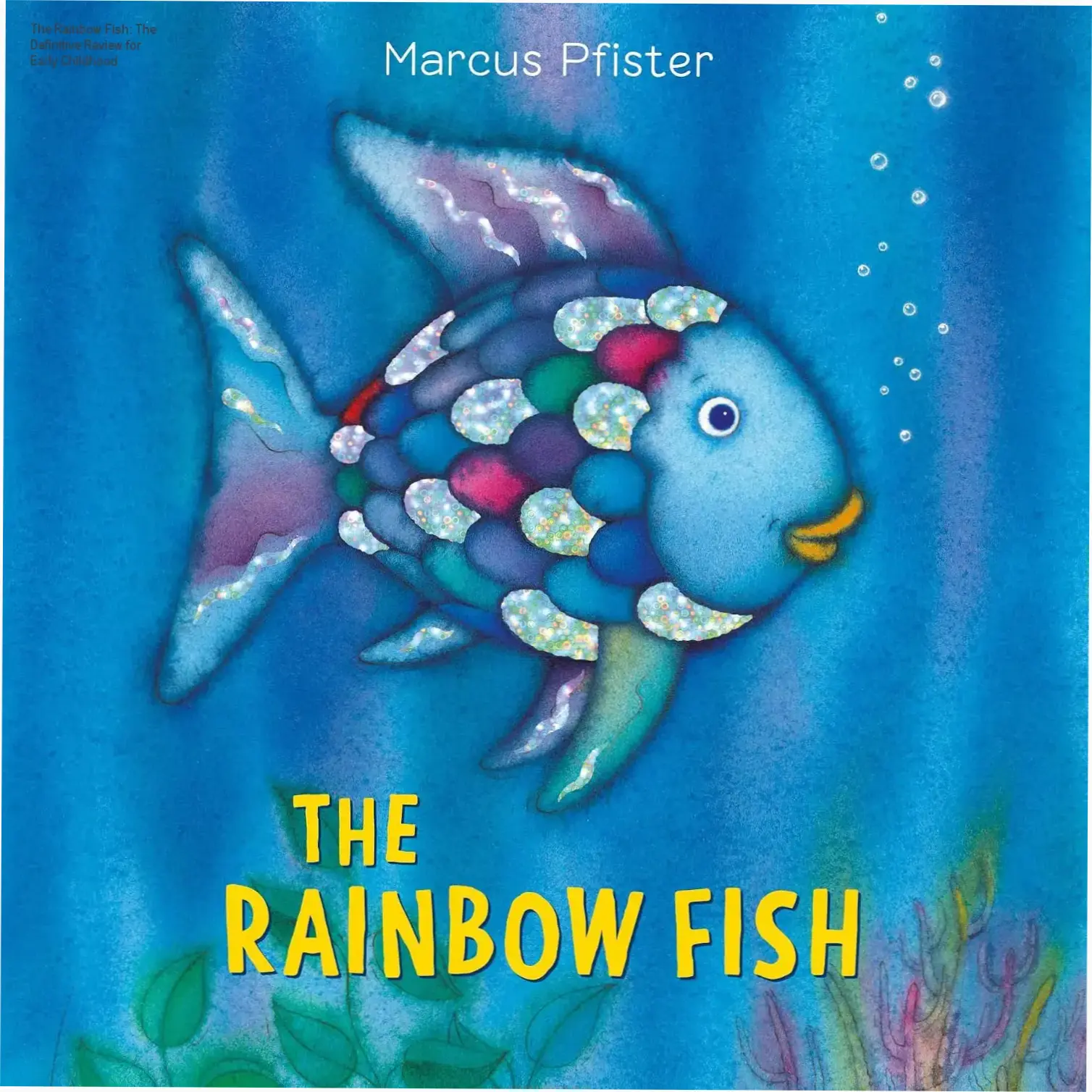
Teaching a toddler the concept of sharing is often an exercise in futility. Most parents know the drill: a sudden outburst of “Mine!” followed by a meltdown that could shake a building. It is a fundamental developmental hurdle where the child’s emerging sense of self clashes with the social requirements of a community.
For those struggling to navigate this phase, The Rainbow Fish arrives not just as a story, but as a visual tool. It attempts to bridge the gap between possessiveness and the emotional reward of generosity, making it a staple in preschool classrooms worldwide.
Ready to dive into “The Rainbow Fish”?
Explore available editions, check current live pricing, or download a free sample directly on Amazon.
*You will be redirected to Amazon. As an Amazon Associate, we may earn from qualifying purchases.
The Sensory Hook: Why Foil Stamping Matters
From a product design perspective, the board book edition of The Rainbow Fish isn’t just about the plot. It’s about tactile and visual stimulation.
The use of holographic foil stamping is a strategic choice. For a child aged 0-3, high-contrast and glittering elements are cognitive triggers that maintain focus.
While some might dismiss the “glitter” as a gimmick, in the context of early childhood development, it serves as an anchor. The child isn’t just listening to a story; they are interacting with a physical object that mimics the shimmer of a real fish.
This sensory engagement reduces the “bounce rate” of a toddler’s attention span, ensuring they stay engaged long enough to absorb the narrative’s moral core.
Narrative Architecture: Vanity vs. Belonging
The plot is deceptively simple. A fish is the most beautiful in the ocean due to his shimmering scales. His vanity, however, leads to total social isolation.
The turning point occurs when the fish realizes that his physical beauty is a barrier, not a bridge. By giving away his prized possessions, he trades individual perfection for collective happiness.
The pacing is lean. In just 14 pages, Pfister moves from introduction to conflict and resolution without filler. This is essential for the “Preschool and up” demographic.
“The universal message at the heart of this simple story… gives this book its enduring value.”
The story doesn’t lecture; it demonstrates a cause-and-effect relationship: Possession = Loneliness, Sharing = Friendship.
The “Forced Sharing” Controversy: A Skeptical Analysis
If you browse Reddit or parenting forums, you’ll find a surprisingly heated debate about this book. Some child psychologists argue that the book promotes “forced sharing.”
The critique is that the Rainbow Fish is pressured to give away parts of himself to be liked. Skeptics argue this teaches children that their value depends on what they give up for others.
However, looking at it through a CRO (Conversion Rate Optimization) lens for behavior, the “conversion” here is the emotional payoff. The fish isn’t just losing a scale; he’s gaining a social network.
The book doesn’t suggest giving everything away until you are empty, but rather sharing the “excess” of your beauty to create a common bond.
Perspective
The “Pro” View
The “Skeptical” View
Who Is This Book Actually For?
This isn’t a “story” in the traditional sense; it’s a visual tool for early childhood development. The board book edition is specifically engineered for the “destructive” phase of reading—babies and toddlers who chew, pull, and drop their books.
The ideal reader profile: Parents of children aged 0 to 3 and preschool educators looking for a tangible way to introduce the concept of generosity. If you need a book that survives a toddler’s grip while providing high visual stimulation, this is it.
Who should skip this book: If you are looking for a complex narrative or a nuanced exploration of social dynamics, look elsewhere. Also, parents who subscribe to the philosophy that children shouldn’t be encouraged to “give away their prized possessions” to fit in might find the moral problematic.
Value for Money: The “Foil” Factor
At first glance, 14 pages seem like a low return on investment. However, you aren’t paying for plot density; you’re paying for production quality.
Tactile Appeal: The holographic foil stamping is the primary selling point. It captures a child’s attention far better than standard ink.
Durability: The board book format eliminates the need for constant repairs.
Longevity: It’s a “starter” classic that usually stays in the family library for years.
The most common purchasing mistake is buying the hardcover version for a 2-year-old. Stick to the board book to avoid immediate tearing.
Editorial Verdict: A Visual Masterclass with a Simple Moral
The Rainbow Fish succeeds because it understands the attention span of a preschooler. It doesn’t overexplain. It uses glittering imagery to anchor a simple lesson: sharing leads to happiness.
While some critics argue the story rewards the fish for giving up his identity, for the target demographic, the lesson is basic and effective. It’s a high-impact, low-friction introduction to empathy.
“The Rainbow Fish” delivers on its core promise for its intended audience, offering compelling insights without fluff. As highlighted in our detailed edition breakdown, its practical depth and readability are its greatest strengths.
Betrayal in midlife doesn’t just break a heart; it shatters the entire blueprint of a person’s future. Many readers pick up stories of “second chances” not for the romance, but to validate the terrifying idea that starting over at forty or fifty is actually possible. Kristin Judd targets this specific emotional void with A Heartbeat…
We need to produce HTML with tags only: , , , , , , , , , . No markdown. Must start with a paragraph of contextualization (180-320 words). Include exactly 1 contextual affiliate link in first or second paragraph using tag “Link_afiliado”. The link must use the exact URL given: https://amzn.to/4xfSYu0. It says we…
In an age where digital communication dominates, the art of the letter feels like a relic—something we’ve traded for instant texts and fleeting emails. Yet, Virginia Evans’ *The Correspondent* reminds us that words on paper still hold weight, even decades later. Through the life of Sybil Van Antwerp, a woman who writes letters to everyone…
Most romance readers are exhausted by the “slow burn” that takes 400 pages to reach a single kiss. There is a specific kind of frustration in watching two characters miscommunicate for three hundred chapters when all you want is the payoff. This is where the concept of the “steamy short” comes in—designed for the reader…
When humanity’s survival hinges on a lone astronaut waking up billions of miles from Earth with no memory of his mission, you’re not just reading a sci-fi thriller—you’re confronting the raw nerve of isolation. Andy Weir’s *Project Hail Mary* isn’t just another space adventure; it’s a masterclass in blending existential dread with razor-sharp humor, a…
The wait for a penultimate installment is a specific kind of torture. You are not just waiting for a story; you are waiting for the architecture of an ending to reveal itself. Sarah J. Maas has built a career on maximalist stakes — mating bonds, ancient curses, wars spanning dimensions — and A Court of…
Utilizamos cookies para garantir que lhe proporcionamos a melhor experiência no nosso site. Se você continuar a usar este site, assumiremos que você está satisfeito com ele.