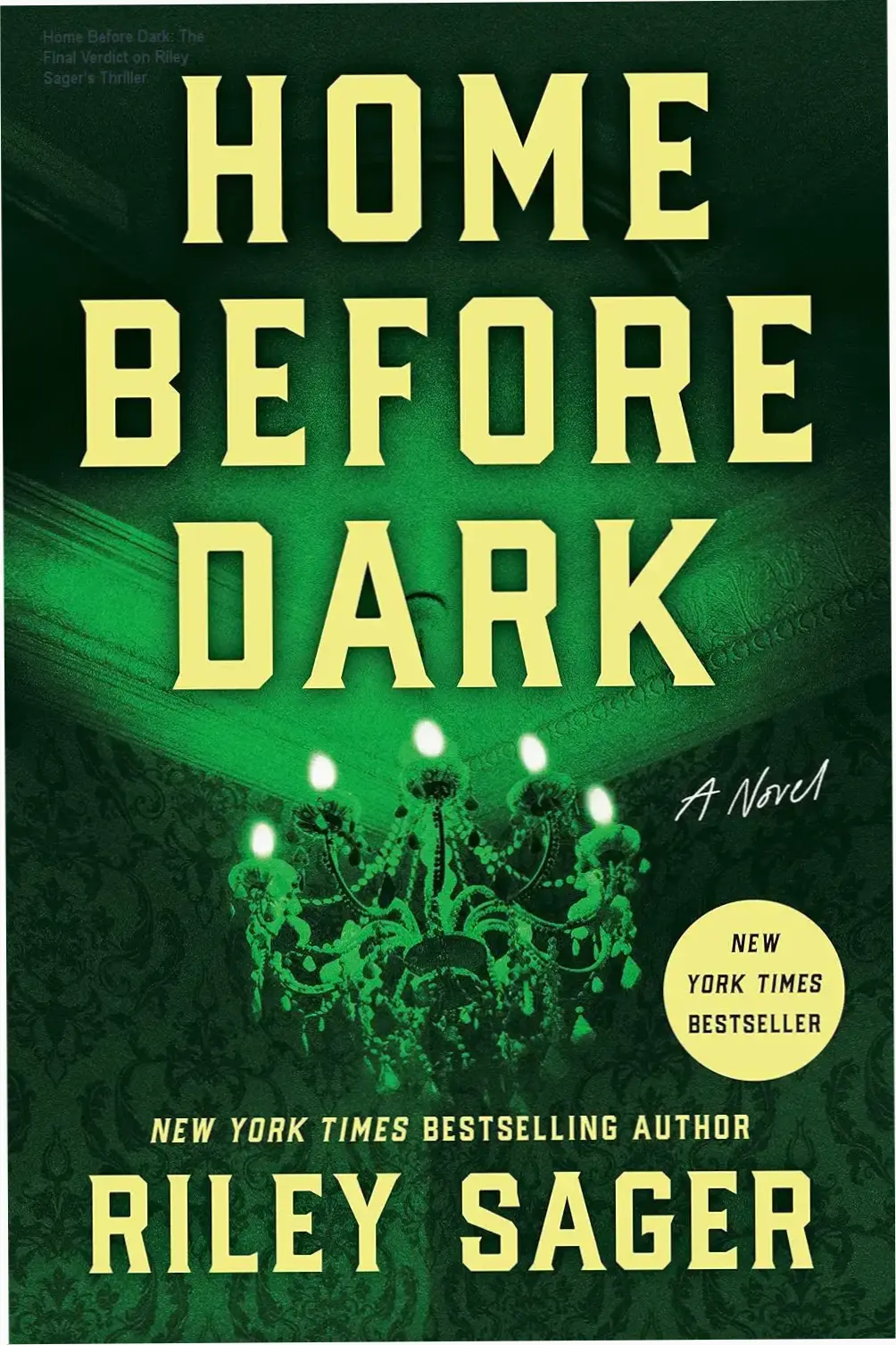
Home Before Dark: The Final Verdict on Riley Sager’s Thriller

Most of us have a version of “family truth”—those stories told so often at dinner tables that they eventually morph into facts. But what happens when that family truth is a global bestseller claiming your childhood home was a gateway to hell? This is the psychological friction at the heart of Riley Sager’s work, where the line between a traumatic memory and a marketing gimmick is intentionally blurred.
For the modern reader, the appeal isn’t just the supernatural dread; it’s the skepticism. We live in an era of “true crime” and debunked myths, making the battle between Maggie Holt’s rationalism and her father’s legacy a perfect mirror for our own desire to find logic in the inexplicable. If you want to see how the community reacted to this tension, you can check the reader reception and availability here.
Ready to dive into “Home Before Dark”?
Explore available editions, check current live pricing, or download a free sample directly on Amazon.
Preview Free Sample & Check Price on Amazon
*You will be redirected to Amazon. As an Amazon Associate, we may earn from qualifying purchases.
The Architecture of Doubt: Narrative Structure
Sager doesn’t just write a story; he constructs a puzzle. The narrative is built on a dual-layer foundation: the “House of Horrors” memoir written by the father and the present-day reality of Maggie Holt.
This structure creates a constant state of cognitive dissonance. As Maggie restores Baneberry Hall, the reader is forced to cross-reference her observations with the father’s sensationalist claims.
It’s a clever play on the “unreliable narrator” trope. We aren’t just questioning if Maggie is seeing things; we’re questioning if her father was a liar or a visionary. This tension sustains the first half of the book effectively.
“Ghosts, after all, don’t exist.” This single line of conviction from Maggie serves as the catalyst for the entire plot, setting up a collision course between logic and the paranormal.
Pacing and the “Sager Formula”
If you’ve read Riley Sager before, you know the rhythm. He utilizes a slow-burn atmospheric build-up that suddenly accelerates into a frantic, high-stakes finale.
The pacing in Home Before Dark is deliberate. He spends significant time detailing the oppressive atmosphere of the Vermont woods and the coldness of the local townspeople.
Some critics on Reddit argue that this “atmospheric padding” can feel repetitive. However, from a technical standpoint, it’s necessary. The isolation of the setting is a character in itself, amplifying the claustrophobia.
The transition from a “renovation story” to a “survival story” is handled with surgical precision, ensuring the reader is sufficiently unsettled before the twists land.
| Technical Aspect | Performance | Verdict |
|---|---|---|
| Atmosphere | Heavy/Oppressive | Excellent |
| Pacing | Slow-burn to Sprint | Consistent |
| Plot Twists | High Frequency | Polarizing |
| Character Arc | Skeptic to Believer | Linear |
Expectation vs. Reality: The Supernatural Gamble
The biggest risk Sager takes is the genre bait-and-switch. The book presents itself as a ghost story, but it’s fundamentally a psychological thriller.
Readers who enter expecting a traditional haunting—complete with poltergeists and demons—might feel cheated. But for those who prefer “earthbound” explanations, the payoff is more satisfying.
The “danger” in Baneberry Hall isn’t necessarily spiritual. It’s rooted in human greed, secrets, and the way trauma can be inherited like a piece of furniture.
This shift reflects a broader trend in modern thrillers: the move from the supernatural to the psychological. Sager uses the idea of ghosts to mask the reality of human malice.
Analyzing Reader Sentiment: The Goodreads Divide
With over 33
Who is this book actually for?
If you enjoy the “rational vs. irrational” conflict, this is your territory. It is meticulously designed for readers who love gothic atmospheres but prefer a logical, earthbound explanation over a genuine ghost story.
It is ideal for fans of The Amityville Horror—not the supernatural elements, but the psychological fallout and the skepticism that follows a “haunted” legacy.
Who should skip it?
Avoid this if you are looking for genuine paranormal horror. Riley Sager writes psychological thrillers, not occult novels. If you want jump scares and actual demons, you will find the resolution frustrating.
Also, skip this if you are fatigued by the “return to the childhood home” trope. It is a central pillar of this narrative; if you have consumed too many domestic thrillers recently, the plot beats may feel predictable.
Value Analysis: Is it worth the read?
At nearly 400 pages, the pacing is deliberate. You aren’t paying for a quick sprint, but a slow descent into paranoia. The value lies in the atmospheric tension.
Sager excels at making the reader doubt the protagonist’s sanity while simultaneously doubting the environment. It is a mental tug-of-war that keeps you turning pages, even when you suspect the “twist” is coming.
Quick Verdict & Reality Check
Common purchasing mistake: Expecting a fast-paced action mystery. This is a character study wrapped in a haunted house aesthetic. It focuses more on the “why” and “how” than on high-speed chases.
The book succeeds because it doesn’t try to be a horror novel; it is a mystery dressed in a haunted house’s clothes. It is a reliable “airplane read”—engaging, atmospheric, and satisfyingly conclusive.
To see if the current pricing fits your budget or to read raw user experiences, you can check the live listings and reader reviews here.
Final Editorial Verdict
“Home Before Dark” delivers on its core promise for its intended audience, offering compelling insights without fluff. As highlighted in our detailed edition breakdown, its practical depth and readability are its greatest strengths.
We also recommend checking the official Kindle sample and reader ratings before making your final purchase decision.

“Marketing de Conteúdo + Desenvolvimento Web = presença digital que gera valor.”