Make It Fast: The Definitive Guide to Effortless Dinners

We have all been there. It is 6:00 PM, you are mentally exhausted, and the distance between your couch and the kitchen feels like a marathon. The internal battle begins: do you spend an hour prepping a meal you’re too tired to enjoy, or do you surrender to the expensive, sodium-heavy convenience of food delivery?
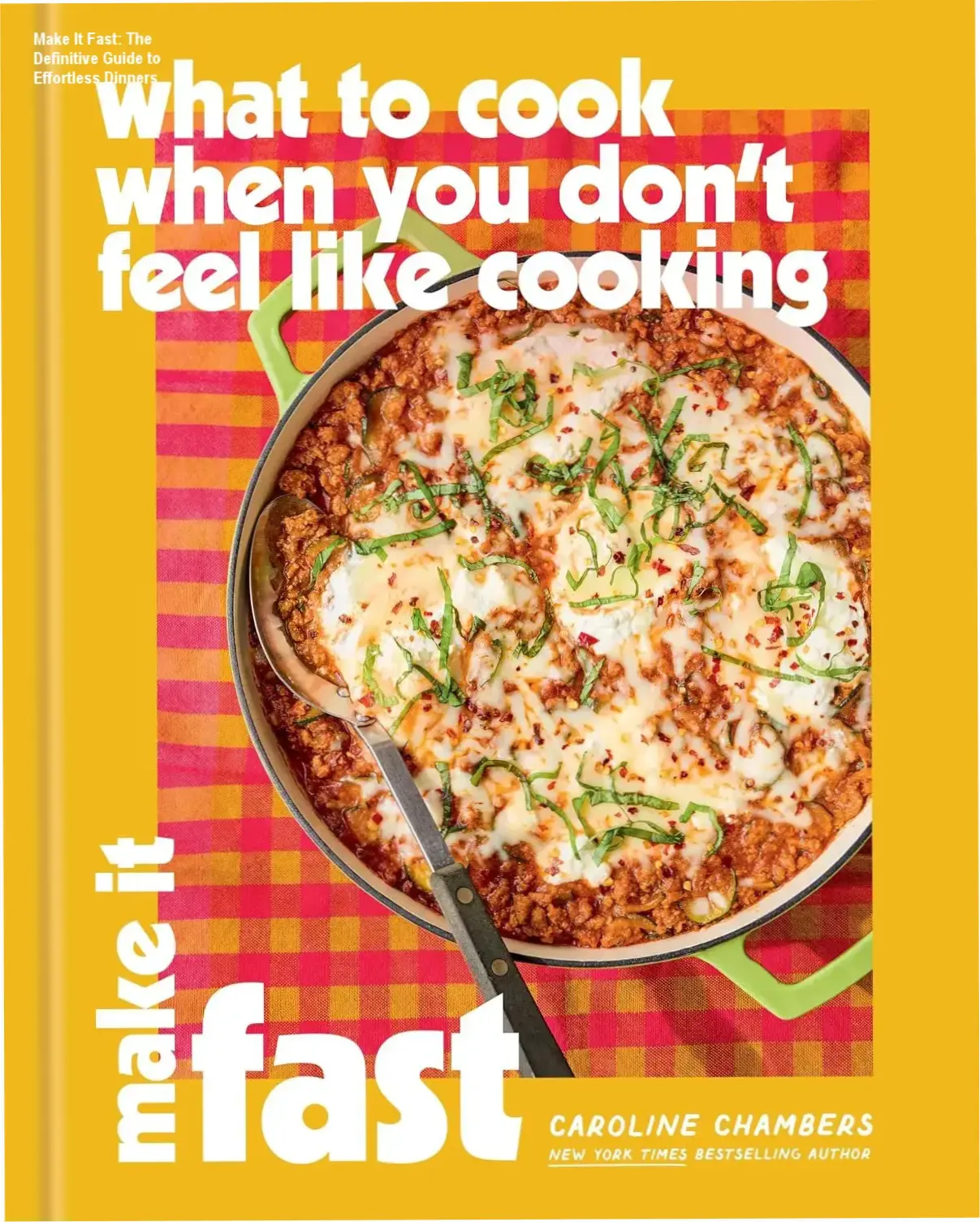
This specific friction—the gap between wanting a decent meal and having zero willpower to execute it—is exactly what Caroline Chambers targets. While most cookbooks sell a fantasy of culinary mastery, What to Cook When You Don’t Feel Like Cooking: Make It Fast sells a solution for the lazy, the overwhelmed, and the time-poor.
Ready to dive into “What to Cook When You Don’t Feel Like Cooking: Make It Fast”?
Explore available editions, check current live pricing, or download a free sample directly on Amazon.
Preview Free Sample & Check Price on Amazon
*You will be redirected to Amazon. As an Amazon Associate, we may earn from qualifying purchases.
The Philosophy of “Anti-Cooking”
Most cookbooks are designed for people who enjoy the process of cooking. They focus on technique, plating, and the “joy” of the kitchen. Caroline Chambers takes the opposite approach. She assumes you hate the process.
Her brand is built on the elimination of friction. This isn’t about “simplifying” recipes; it’s about removing unnecessary steps. She targets the “hidden” labor—the chopping, the scrubbing of three different pans, and the mental load of complex instructions.
From a product perspective, this is a brilliant pivot. Instead of selling a hobby, she is selling a time-saving tool. The focus is on “hands-on time,” which is a critical distinction. If a dish takes 40 minutes in the oven but only 5 minutes of your active effort, it fits her criteria.
This approach resonates deeply with the modern workforce. We don’t want a culinary journey; we want a flavorful meal that doesn’t leave us with a mountain of dishes at 9:00 PM.
Analyzing the “Hands-On” Metric
The core value proposition of “Make It Fast” is the 30-minute hands-on limit. This includes everything: chopping, marinating, and prep. In the world of cookbooks, this is a bold claim that often falls apart upon first attempt.
However, Chambers achieves this by leaning heavily on “shortcuts.” We are talking about pre-cut vegetables, rotisserie chickens, and store-bought bases. To a culinary purist, this is heresy. To a tired parent or a freelance worker, it’s a godsend.
The structure is intuitive. By organizing recipes into time-based chapters, the book functions like a menu. You don’t browse by “Italian” or “Vegetarian”; you browse by “How much energy do I actually have left in my battery?”
| Feature | Traditional Cookbook | Chambers’ “Make It Fast” |
|---|---|---|
| Focus | Culinary Technique | Friction Reduction |
| Time Metric | Total Cook Time | Active Hands-on Time |
| Ingredient Prep |
Who Should Actually Buy This Book?This isn’t a book for people who find solace in the rhythmic chopping of carrots or the slow simmer of a four-hour ragu. If cooking is your “wind-down” ritual, you’ll find Caroline Chambers’ approach almost aggressively efficient. The ideal reader is someone battling decision fatigue. You know the feeling: you have food in the fridge, but the mental energy required to coordinate a recipe feels like a second job. This book targets the “executive dysfunction” of dinner time. Who should skip this:
Value for Money: System vs. RecipesIf you view this as just a collection of 100 recipes, the price point might seem steep. You can find “30-minute meals” for free on any blog. However, the real value lies in the system of friction removal. The “anchor recipes” are the MVP here. Turning one base preparation into five different meals isn’t just a time-saver; it’s a strategic strike against food waste and repetitive eating. You aren’t paying for ingredients lists; you’re paying for a mental framework that eliminates the “What’s for dinner?” anxiety. Quick Reality Check (FAQ)Is it actually “Fast”? Yes, but be careful. “Hands-on time” is the key metric here. Some dishes might take 40 minutes total, but you’ll only be working for 10. Read the fine print. Is it healthy? It’s balanced. It’s not a strict diet book, but it prioritizes complete meals over empty calories. Does it require fancy gear? No. It’s designed for the average kitchen, focusing on minimizing dirty dishes rather than maximizing gadget use. Editorial ConclusionWhat to Cook When You Don’t Feel Like Cooking: Make It Fast succeeds because it acknowledges a truth most cookbooks ignore: sometimes, the hardest part of cooking is the desire to do it. It transforms the kitchen from a place of chores into a place of assembly. It is a pragmatic tool for the modern, overstimulated professional. If you want to stop ordering takeout not because you lack money, but because you lack the will to chop an onion, this is your manual. You can check live user ratings on Amazon to see how these shortcuts hold up in real-world kitchens. Final Editorial Verdict“What to Cook When You Don’t Feel Like Cooking: Make It Fast” delivers on its core promise for its intended audience, offering compelling insights without fluff. As highlighted in our detailed edition breakdown, its practical depth and readability are its greatest strengths. We also recommend checking the official Kindle sample and reader ratings before making your final purchase decision. |