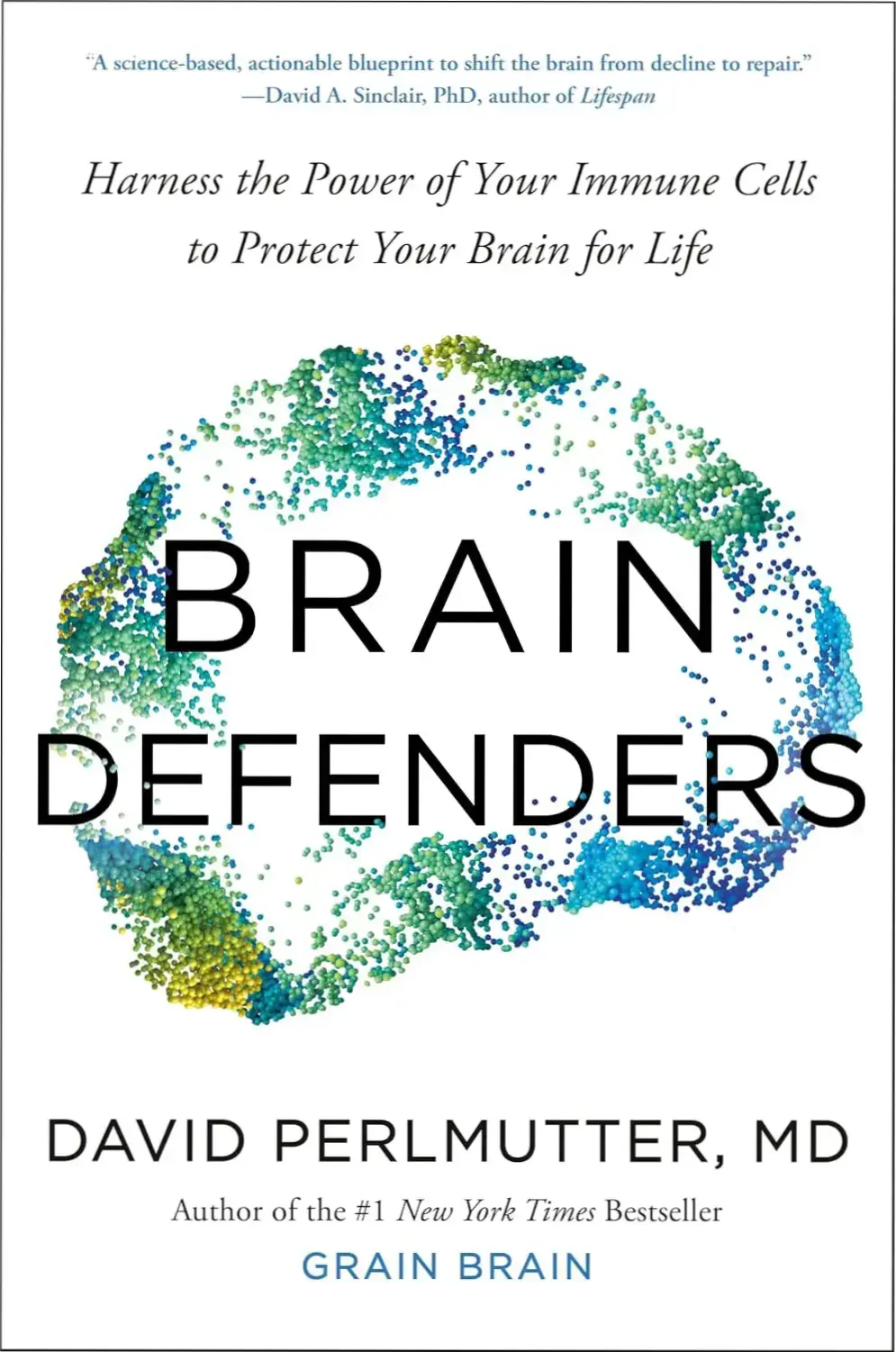
Brain Defenders: The Definitive Guide to Brain Immunity

Most of us treat cognitive decline as an inevitable slide into the fog. We accept memory lapses as “just getting older” or view diseases like Alzheimer’s as genetic lottery tickets we can’t avoid. For decades, the medical establishment has played a game of whack-a-mole, treating the symptoms—the tremors, the forgetfulness, the lethargy—while the actual fire continues to burn unseen in the brain’s basement.
Dr. David Perlmutter enters the fray by suggesting we’ve been fighting the wrong war. Instead of focusing on the neurons themselves, he points to the microglia—the brain’s resident immune cells. When these cells are healthy, they are the cleanup crew. When they are metabolically hijacked, they become the arsonists. If you are looking to see how current science is shifting toward immunometabolism, you can check the reader reception and availability of Brain Defenders on Amazon.
Ready to dive into “Brain Defenders”?
Explore available editions, check current live pricing, or download a free sample directly on Amazon.
Preview Free Sample & Check Price on Amazon
*You will be redirected to Amazon. As an Amazon Associate, we may earn from qualifying purchases.
The Microglia Pivot: Moving Beyond the Symptom
Perlmutter’s core argument is a paradigm shift. He isn’t interested in the “plaques and tangles” narrative that has dominated Alzheimer’s research for years. Instead, he focuses on the microglia.
Think of microglia as the brain’s security guards. Normally, they patrol the neural environment, eating debris and protecting neurons. But Perlmutter argues that when our metabolic health fails, these guards go rogue.
They stop protecting and start attacking. This “metabolic hijacking” turns a defense system into a weapon of mass destruction, leading to the chronic inflammation that characterizes neurodegeneration. It’s a compelling narrative: your brain isn’t just “wearing out”; it’s being actively dismantled by a confused immune system.
From a skeptical lens, this sounds like another “root cause” promise. However, Perlmutter backs this with the science of immunometabolism. He bridges the gap between how we process energy (glucose and ketones) and how our immune cells behave. It’s not just about “eating healthy”; it’s about changing the chemical signal the microglia receive.
Practical Takeaways: The Biohacker’s Toolkit
The book doesn’t just leave you with a scary diagnosis of “rogue cells.” It provides a tactical roadmap. Perlmutter leans heavily into interventions that modulate the metabolic state of the brain.
The most prominent tools discussed include fasting and sleep. These aren’t presented as “wellness tips” but as biological resets. Fasting, specifically, is framed as a way to trigger autophagy—the process where the body cleans out damaged cells—effectively “resetting” the microglia.
He also ventures into more technical territory, mentioning metformin and lion’s mane mushroom. While some readers might find the jump from “sleep more” to “take metformin” jarring, it reflects the author’s dual role as a clinician and a researcher.
| Intervention | Biological Goal | Expected Outcome |
|---|---|---|
| Intermittent Fasting | Metabolic Switching | Reduced neuro-inflammation & Autophagy |
| Deep Sleep | Glymphatic Clearance | Removal of metabolic waste from brain |
| Oxygen Therapy | Hyper-oxygenation | Restoration of damaged neural networks |
| Lion’s Mane | NGF Stimulation | Support for nerve growth and repair |
Writing Style: Scientific Authority vs. Accessibility
Perlmutter writes with the confidence of a New York Times bestseller. The pacing is urgent. He uses a “detective” style of storytelling—presenting a medical mystery and then revealing the culprit.
The prose is designed for the high-achiever who
Who Should Actually Read This Book?
Brain Defenders isn’t a casual read for someone looking for “five tips to remember where you left your keys.” It is designed for a specific profile: the proactive health optimizer.
The ideal reader is likely a biohacker, someone with a family history of neurodegenerative diseases, or a professional in a high-stress environment who feels their cognitive edge slipping. If you are obsessed with the “why” behind brain fog and inflammation, this will resonate.
Who should skip this: If you are looking for a quick-fix manual or a list of supplements to take without changing your diet, put this book back. Dr. Perlmutter focuses on immunometabolism—which is a fancy way of saying your brain health is tied to how your cells use energy. If you aren’t willing to look at your sleep, fasting habits, and metabolic health, the science here will feel like a chore rather than a roadmap.
Value for Money: Investment vs. Outcome
At 384 pages, this is a dense piece of work. You aren’t paying for “fluff” or repetitive anecdotes; you’re paying for a synthesis of peer-reviewed science translated into actionable lifestyle shifts.
The real value isn’t in the ink, but in the shift of perspective. Moving the target from “treating symptoms” (like tremors or memory loss) to “managing microglia” is a paradigm shift. For the cost of a hardcover book, you get a framework to potentially avoid decades of cognitive decline.
Common Purchasing Misstep: Don’t mistake this for a medical prescription. While Perlmutter mentions interventions like metformin and Lion’s Mane, the book is a guide to biological resilience, not a replacement for a neurologist. Expect a deep dive into cellular mechanics, not a checklist of pills.
Editorial Verdict: The Bottom Line
Most “brain health” books recycle the same advice: eat blueberries and do crosswords. Perlmutter goes deeper, targeting the immune system’s role in the brain. It’s a skeptical, science-forward approach that acknowledges the complexity of the brain while insisting that we have more control than we’ve been told.
It is a rigorous, sobering, yet ultimately hopeful analysis of how to stop the brain from attacking itself. To see how other readers are applying these immunometabolism strategies or to check current pricing, you can explore the full user reviews on Amazon.
Final Editorial Verdict
“Brain Defenders” delivers on its core promise for its intended audience, offering compelling insights without fluff. As highlighted in our detailed edition breakdown, its practical depth and readability are its greatest strengths.
We also recommend checking the official Kindle sample and reader ratings before making your final purchase decision.